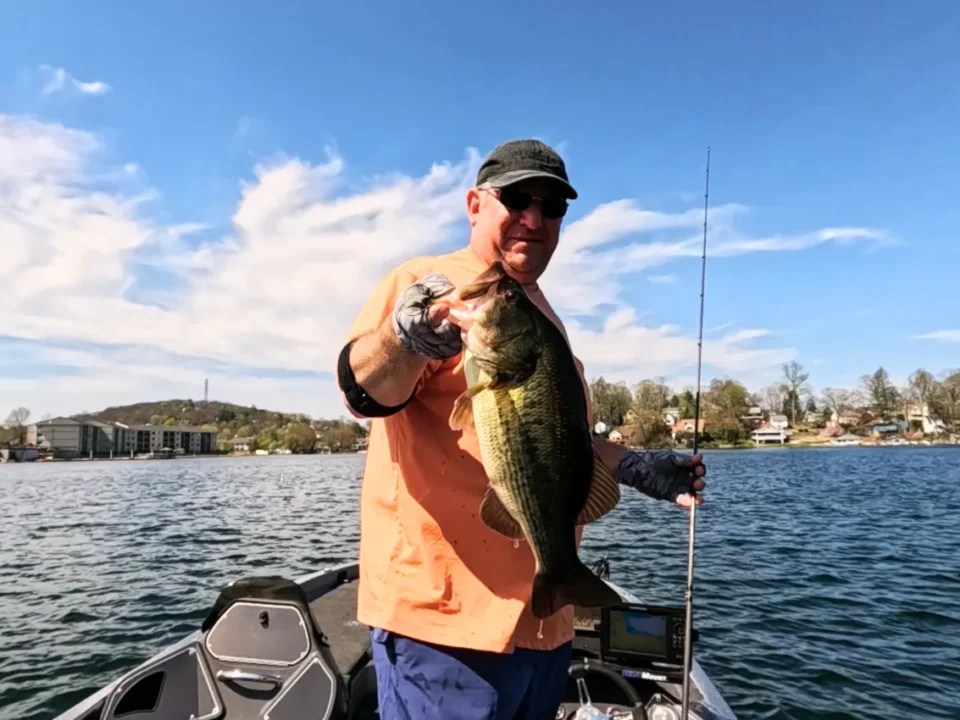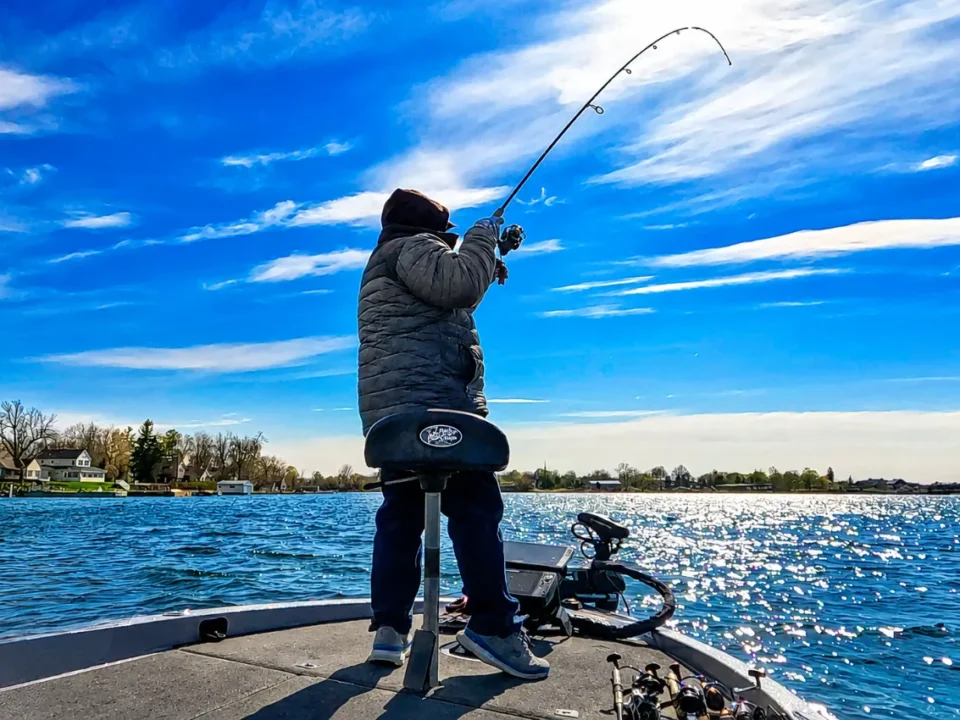
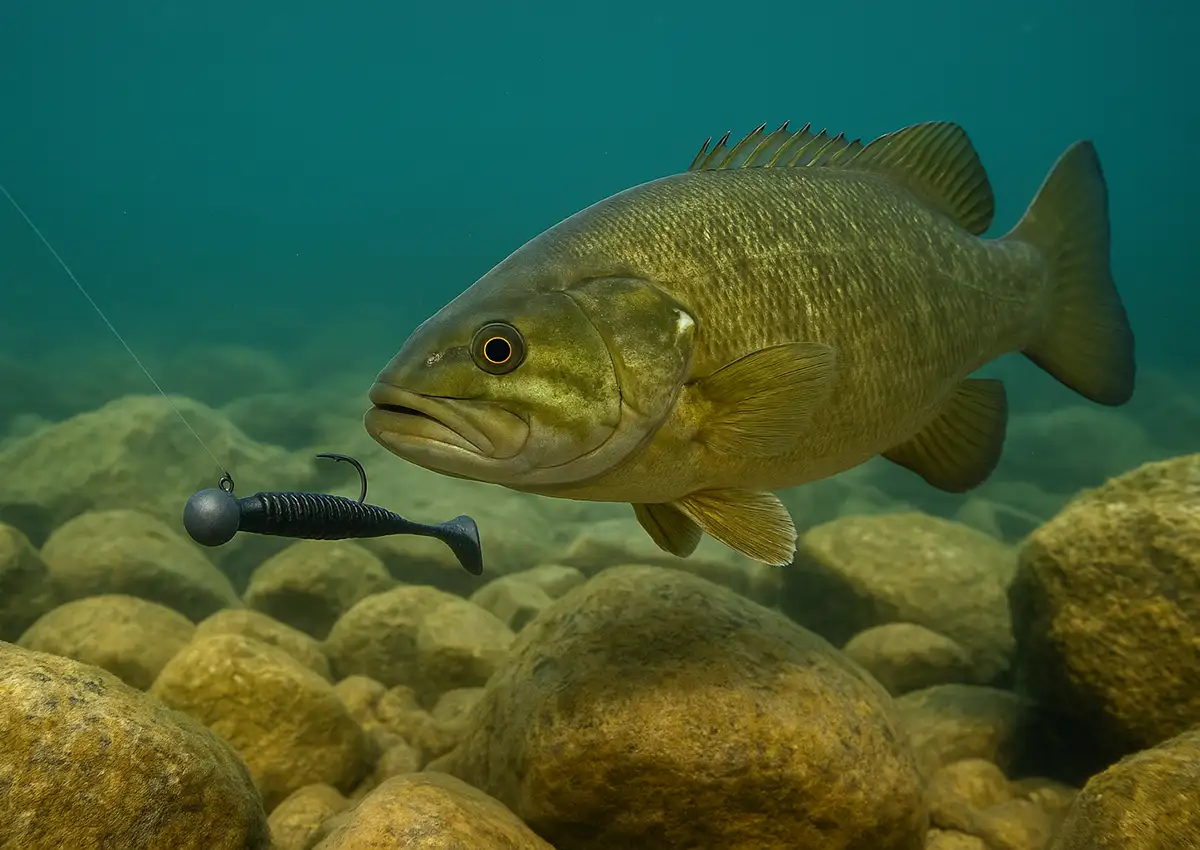
Slow-rolling a swimbait isn’t a cure-all tactic—it’s a targeted precision approach for bass that refuse to leave bottom structure. When largemouth and smallmouth lock down along rock, shell, or boulder fields, few techniques can trigger them more consistently than a properly executed slow-roll. This guide breaks down the gear, retrieve, sonar integration, and boat positioning needed to master this highly effective presentation.
Mastering the Slow-Roll Technique
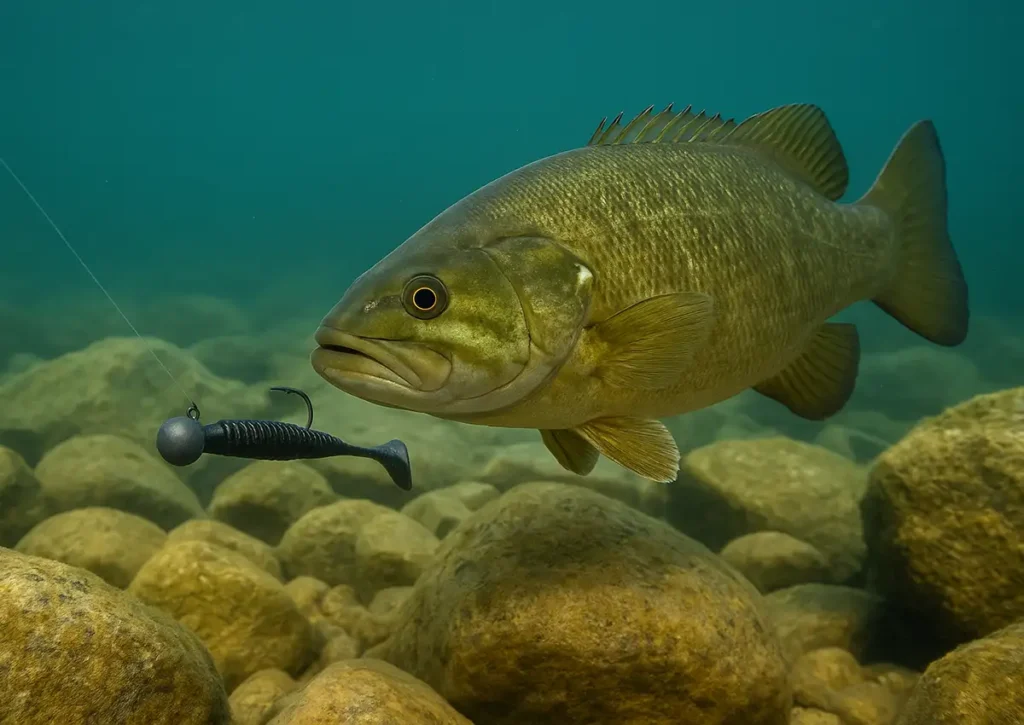
The essence of this technique is maintaining controlled bottom contact. The swimbait should glide just above the substrate, occasionally bumping rock or structure to mimic a baitfish moving naturally. Make a long cast, allow the bait to fall until the line goes slack (indicating it has reached the bottom), and then begin a slow, steady retrieve. No jerks or hops—just a consistent, natural swim. Forward-facing sonar adds precision. Anglers can now see the bait’s descent, confirm bottom contact, and watch fish that rise to intercept. Many bass hold so tight that they’re invisible on sonar until they move.
Slow-rolling is all about maintaining the perfect level of bottom contact—not too much, not too little. The goal is to feel the bottom without dragging through it. Heavy heads grind, wedge into rock, and hang up more often. Light contact keeps the bait swimming naturally while maintaining that crucial connection to the structure. If the lure loses contact with the bottom, don’t immediately reel faster—slow down. Adjusting retrieve speed is the simplest way to keep the bait where it needs to be. You almost want to see a slight bow in your line—not slack, but a gentle curve that allows the bait to swim freely while staying in touch with the bottom. When you can reel at a speed that keeps that light contact, you’ve found the perfect combination of line diameter, jig weight, and retrieve pace. That’s the zone—stay there. Because when the bait’s moving right, the bites are coming.
Selecting the Right Swimbaits and Jig Heads
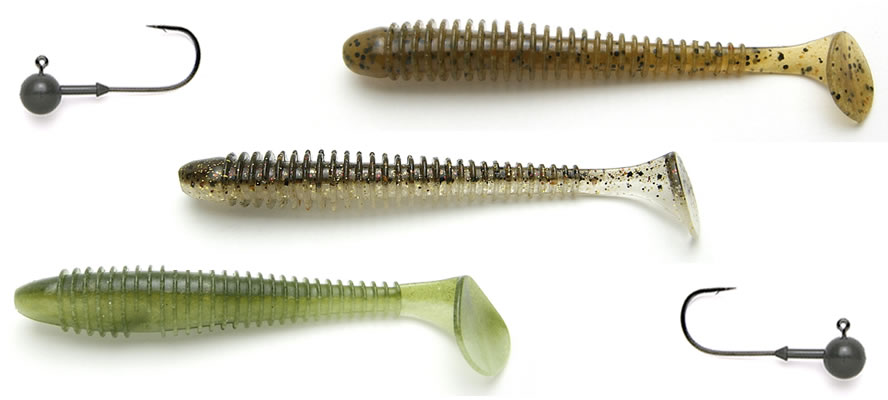
A variety of sizes should be ready to go: 2.8″, 3.3″, 3.8″, and 4.8″. The smaller profiles work when fish are pressured or neutral, while the larger versions shine around aggressive bass or when the lake’s forage runs big. Football jig heads are the preferred choice about 90% of the time, keeping the bait upright and preventing roll when bumping through rock or rubble. Weights range from ¼ oz to ¾ oz depending on conditions—use the lightest head possible while maintaining bottom contact. The goal is to bump the bottom, not grind it.
Color Selection
While matching the hatch is always a smart starting point, color selection goes deeper than that. In clear water, subtle colors like smoke, green pumpkin, or natural baitfish tones often work well—but one color consistently outperforms them all: black.
We fish clear water a lot, and over time, black has caught more bass than any other color. It’s the ultimate “shadow”—a confident, natural profile that stands out in any light condition without looking unnatural. There are definitely days when bass show a preference for a specific color, but black works across the board. It’s what we call sneaky AF—visible enough to trigger strikes without giving itself away.
At BASSIN’ USA, we have a saying: “You can throw any color you like… as long as it’s black.”
Ideal Rod, Reel, and Line Setup
Rod
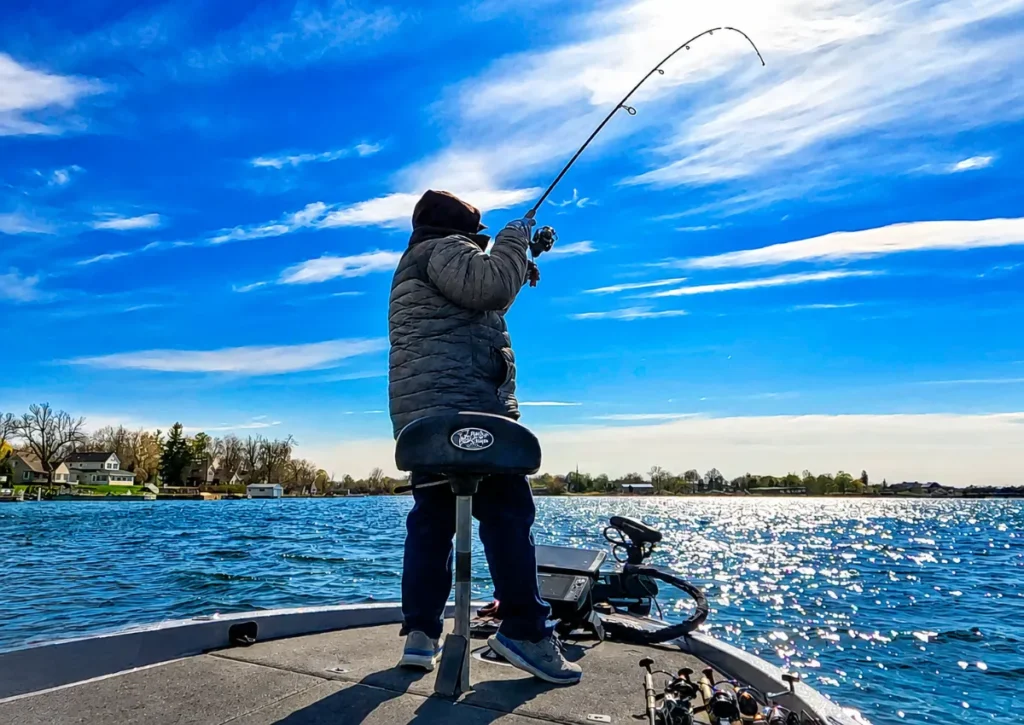
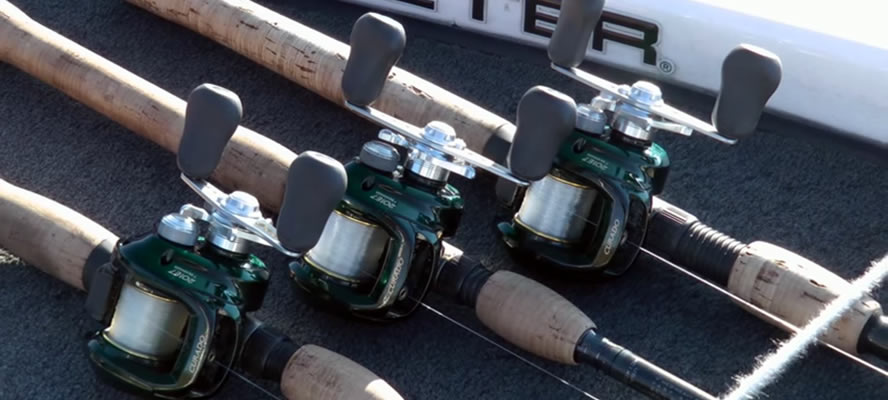
Length & Power: 7′–7′4″ Medium-Heavy to Heavy power, fast action. When bass clamp down in deep water, that fast tip is crucial for driving the hook home. A soft rod won’t get the hook started, and when fish jump, they’ll often throw the bait. A fast-action rod transfers energy instantly, ensuring a solid hookset and better control throughout the fight.
Reel
Gear Ratio: 6.2–7.1:1 baitcaster. A high-speed reel helps pick up line quickly when fish bite and run toward the boat. Lock the drag down on the hookset—you can back it off once the fish is pinned, but a slipping drag kills your hook penetration.
Line
Use 12–16 lb fluorocarbon for most conditions. It’s sensitive, low-stretch, and sinks to keep the bait in the strike zone. Some anglers prefer a braid-to-fluoro leader for extra sensitivity; both setups work. Heavier line (16 lb+) for jagged rock or zebra mussels, lighter (12 lb) for open flats and deep water. Fluorocarbon’s smaller diameter compared to monofilament allows it to cut through the water better and keep the lure tracking naturally.
Forward-Facing Sonar Advantages
Forward-facing sonar has completely changed how anglers approach slow-rolling swimbaits. It’s no longer just a feel-based technique — it’s a visual game. Systems like Garmin LiveScope, Lowrance ActiveTarget, and Humminbird MEGA Live allow you to see everything in real time: your bait, bottom contour, and fish reactions.
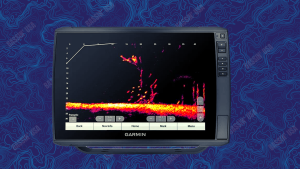
You can watch your swimbait fall, confirm when it hits bottom, and even see fish rise to investigate or follow. Sometimes they’ll trail behind it for 20 feet before committing, or turn off when the retrieve is too fast. Those instant feedback moments let you make small, effective adjustments — slowing down, changing direction, or switching weights — to stay in the perfect zone.
Sonar also reveals which side of structure the bass are using. If they’re on the backside of a stone wall or hugging the shadow of a boulder, you’ll know instantly. This insight saves countless wasted casts and helps you focus on high-percentage angles.
Once you learn to read these reactions, sonar becomes more than a visual aid — it’s a real-time teaching tool that refines every decision you make on the water.
Boat Positioning and Casting Angles
Forward-facing sonar gives you the picture — boat control makes the picture count.
Proper positioning ensures your bait stays in the strike zone from start to finish. When working long stone walls or riprap, position the boat to cast parallel, not perpendicular — this maximizes bottom contact time. On points and ledges, cast so the swimbait follows the contour naturally, maintaining that subtle bump without grinding.
When fishing boulder fields or isolated rock piles, keep the boat far enough back to let your bait glide through the structure without snagging. Use the wind and current to your advantage — slight drifts can help you maintain perfect depth and contact without overcorrecting with the trolling motor.
Even with the best sonar, the angler who controls their boat angle, depth line, and retrieve speed will outfish everyone else. The more you align positioning with what sonar shows, the more consistent and deadly this technique becomes.
Adapting to Conditions
In cold water, slow down—bass may peck at the bait several times before fully committing. In warm water, slow-rolling remains effective when fish hold to rock or bottom cover for ambush. In wind or current, increase head weight (½–¾ oz) to maintain contact without losing glide. Adjust color and retrieve speed to match visibility in clear vs. stained water.
Scent and Realism
Keitech swimbaits already carry a strong natural scent that encourages strikes. For unscented brands, a light coating of attractant can help fish commit—especially in cold water—but avoid overdoing it. Too much scent can mask the bait’s texture and turn fish off.
Largemouth and Smallmouth Behavior
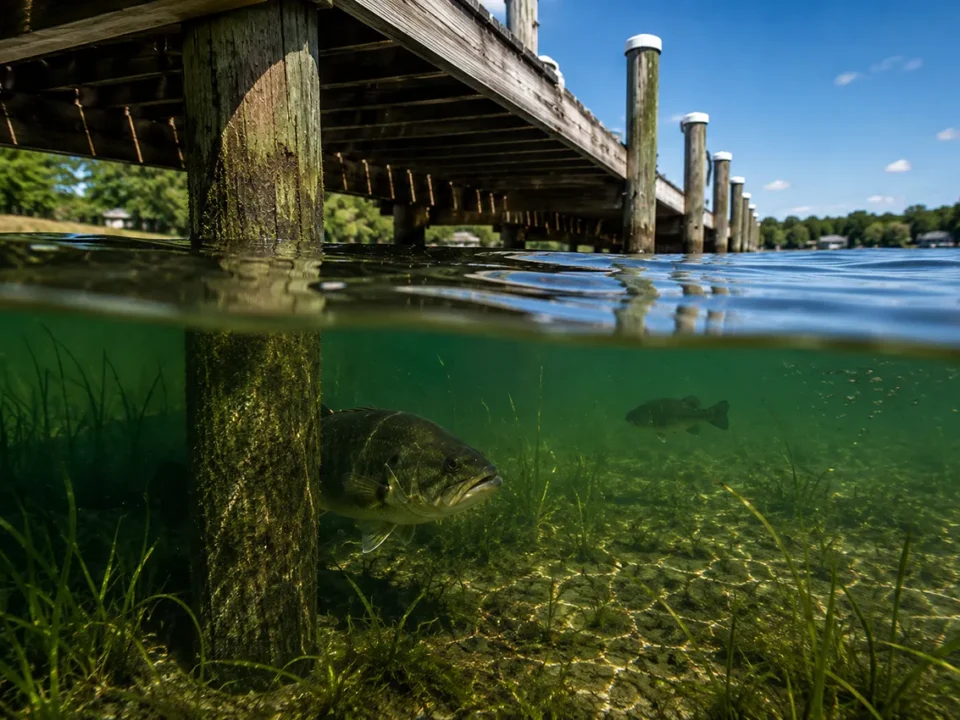
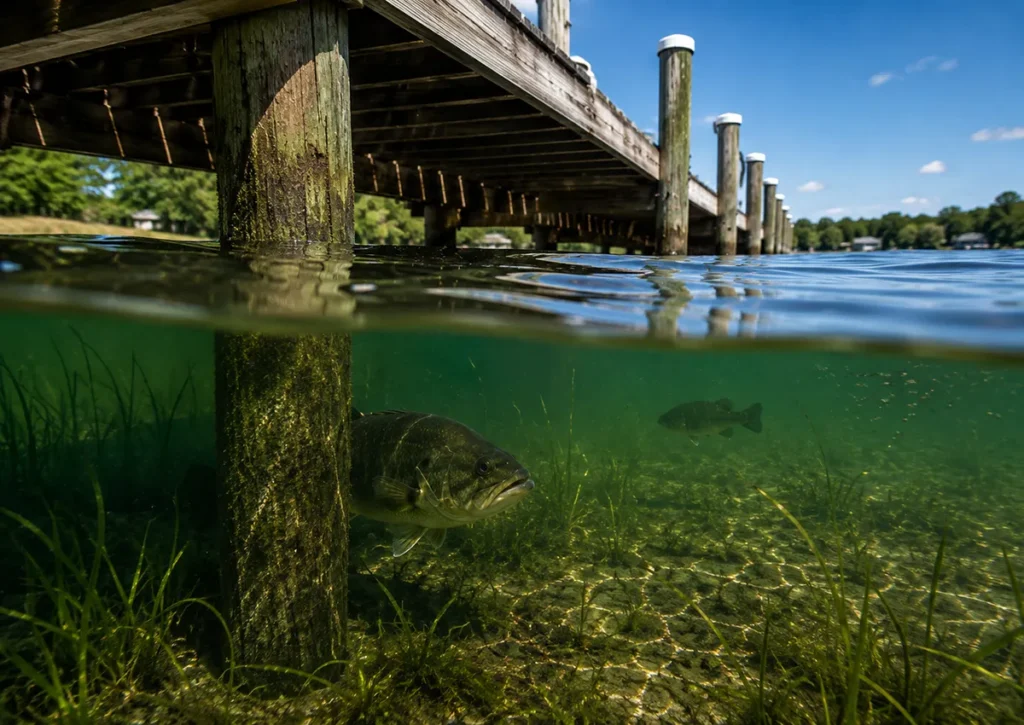
Both largemouth and smallmouth react aggressively to this presentation when they’re tight to the bottom. Smallmouth often relate to rock, current seams, and deep breaks, while largemouth hold near boulders, docks, or grass edges. In both cases, boat angle and contact control are the difference between followers and eaters. Bass size doesn’t dictate swimbait size—matching forage does. Both species will eat anything from 2.8″ to 4.8″ when the conditions call for it. Smaller profiles excel when fish are keyed on smelt or shiners, while larger ones better match bluegill, alewife, or shad. Focus on matching the hatch, not the species. Expect violent thumps when they commit—bigger baits often draw the hardest hits.
Common Mistakes
Fishing too fast, dragging instead of rolling, using jig heads that are too heavy, ignoring boat angle, and setting the hook prematurely are all common errors. Slow down, stay in contact, and let the rod load before driving the hook home.
Final Thoughts
Slow-rolling swimbaits is a technique built on patience, precision, and control. When the conditions align and bass are tight to the bottom, this method outperforms almost anything else. It’s subtle but deadly—a proven way to fool the biggest, most stubborn fish in the system. Next time you encounter bass hugging rock, ledges, or stone walls, tie on a football-head swimbait, let it fall until the line goes slack, and start the roll. You might be surprised how hard those bottom-holding bass hit.