Launching a boat at a busy public ramp can be intimidating if you're new to boating, and even experienced boaters can make mistakes that slow everyone down. Knowing what to do before you reach the ramp, how to launch and retrieve efficiently, and a few basic rules of boat ramp etiquette can make the entire process safer and easier for everyone.
Whether you're launching a bass boat before sunrise, taking the family out for the afternoon, or arriving for your first fishing tournament, the basic process is the same: prepare away from the ramp, launch or retrieve safely and efficiently, and clear the area when you're finished.
If you're new to boating or just getting started with fishing, don't let a crowded ramp intimidate you. Nobody started out knowing how to back a trailer or launch a boat. Take the time to practice, understand the process before you arrive, and don't be afraid to ask for help when you need it.
🎣 BASSIN' USA Tip: The active boat ramp should be used for launching and retrieving. Loading gear, organizing tackle, removing covers and preparing for the day should happen in the staging area.
Prepare Your Boat Before You Reach the Ramp
One of the biggest causes of unnecessary delays is waiting until the trailer is on the ramp to prepare the boat. Most launch preparation should happen in a designated staging area or somewhere safely out of the traffic flow.
Before getting into the launch line, take care of things such as:
- Load coolers, tackle and other gear.
- Remove the boat cover.
- Remove transom tie-down straps when appropriate.
- Install and double-check the drain plug.
- Prepare dock or bow lines if you'll need them.
- Make sure required safety equipment is aboard.
- Prepare electronics and other equipment.
- Check that the motor is positioned properly for launching.
- Make sure passengers know what they're supposed to do.
Developing the same routine every time you launch helps prevent forgotten steps and keeps you from holding up everyone behind you.
Learn to Back Your Trailer Before the Ramp Is Crowded
If you're new to towing a boat, a crowded Saturday morning ramp isn't the best place to learn how to back a trailer.
Find an empty parking lot and practice backing between parking spaces or cones. Learn to use your mirrors and understand how small steering corrections affect the trailer. Once you're comfortable controlling the trailer at slow speeds, launching becomes considerably less stressful.
Even experienced boaters occasionally need to pull forward and straighten the trailer. There's nothing wrong with that. Staying controlled and safe is more important than trying to impress the people waiting behind you.
Respect the Launch Order
Busy ramps often develop their own natural line. Pay attention to who's ahead of you and which lanes are being used.
If you're not ready when your turn comes, let someone who is prepared go ahead. That's much better than occupying a lane while you spend ten minutes getting your boat ready.
At multi-lane ramps, stay within your lane whenever possible. Backing diagonally across two usable lanes can unnecessarily cut the ramp's capacity in half.
Launch the Boat and Clear the Ramp
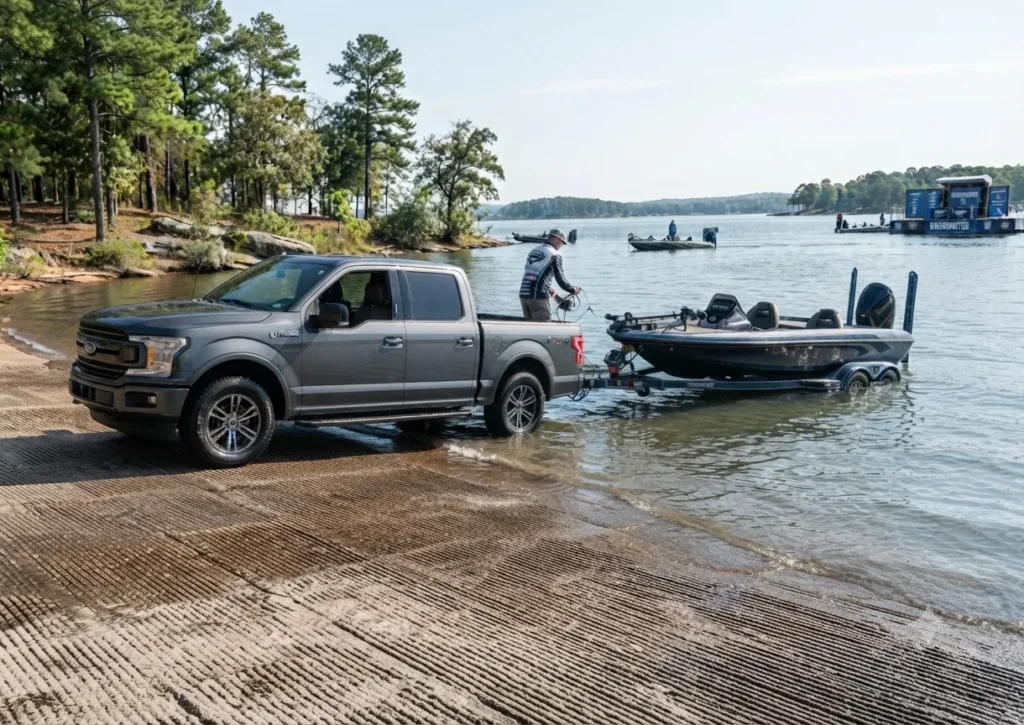
Once you're on the ramp, the goal is simple: safely get the boat into the water and clear the active launch area.
If you're launching with someone else, having a routine makes the process much easier. One person can handle the boat while the other parks the tow vehicle. Once launched, move the boat to an appropriate waiting area or courtesy dock without blocking other launch lanes.
If you're launching alone, have your lines and equipment ready before backing down. Solo launching may take a little longer, and that's fine. Preparation is what keeps the extra time to a minimum.
Don't Turn the Courtesy Dock Into Your Personal Marina
Courtesy docks near busy ramps are generally there to help boaters transition between their vehicles and boats. During busy periods, dock space can become just as valuable as ramp space.
Once you've launched, don't leave your boat tied in a position that prevents others from using the dock any longer than necessary. Likewise, after retrieving your tow vehicle, be ready to load rather than occupying the dock while reorganizing gear or preparing to leave.
Retrieving Your Boat Requires the Same Courtesy
Boat ramp etiquette doesn't end when you come back from a day on the water.
When possible, have the boat ready before bringing the trailer onto the ramp. Once the trailer is in position, load the boat, secure it sufficiently for pulling away from the water, and move to the designated tie-down or staging area.
That's where you can finish securing transom straps, remove electronics, organize tackle, lower antennas, drain water where required, and prepare the boat for the road.
Don't perform your entire post-fishing routine while sitting on the active ramp.
Be Careful with Power Loading
Driving a boat aggressively onto a trailer may seem efficient, but prop wash can erode material beneath and beyond the end of a ramp, potentially creating holes, drop-offs and damage. Some facilities prohibit power loading entirely.
Know the rules at the particular ramp you're using. When power loading isn't permitted or isn't appropriate, use the trailer winch to finish loading the boat.
Boat Ramp Etiquette at Night
Launching before daylight is normal for anglers, especially during the summer and on tournament mornings. Unfortunately, bright headlights pointed down a ramp can make backing extremely difficult for everyone else.
Use the lighting necessary to maneuver safely, but be considerate of other drivers. When conditions allow and it can be done safely, avoid shining bright headlights directly into the mirrors and eyes of someone backing down an adjacent lane.
Make sure your boat's required navigation lights are operational before leaving the dock. A dark ramp is not the place to discover that your bow light hasn't worked since last season.
What If Your Boat Won't Start?
Mechanical problems happen to everyone. The important part is how you handle them.
If your boat won't start and you can't quickly solve the problem, don't occupy an active launch lane indefinitely while troubleshooting. When safely possible, move the boat and trailer out of the way and diagnose the problem somewhere that doesn't prevent everyone else from launching.
This is another reason preseason maintenance and checking your boat at home are so important. Batteries, fuel systems, pumps, lights and other equipment are much easier to troubleshoot in your driveway than with six trailers waiting behind you.
Boat Ramp Safety Comes Before Speed
Efficiency is important, but never at the expense of safety. Boat ramps can be steep, wet and extremely slippery. They also combine moving vehicles, trailers, boats and pedestrians in a relatively small area.
Watch for children and other pedestrians, keep unnecessary passengers clear while backing, use your parking brake appropriately, and make sure your vehicle and trailer are secure before leaving the driver's seat.
Never rush simply because other boaters are waiting. A prepared boater can be both efficient and careful.
Clean, Drain and Dry Before Heading to Another Waterbody
Boat ramp responsibility also includes protecting the waters we fish. Aquatic plants, animals and other invasive species can hitchhike between lakes and rivers on boats, trailers and fishing equipment.
After leaving the water, inspect and clean your boat, trailer and equipment, drain water from the bilge, livewells, motor and other water-holding areas as required, and allow equipment to dry before entering another waterbody. Always follow the specific invasive-species regulations for the state and waterbody you're fishing.
Boat Ramp Tips for Your First Fishing Tournament
Your first bass tournament adds another layer to boat ramp etiquette because a large number of anglers may be trying to launch during a very short period before takeoff.
Prepare the night before. Have your tackle organized, rods ready, batteries charged, fuel in the boat and safety equipment checked. Tournament morning is not the time to reorganize everything in your storage compartments.
Know the tournament procedures. Read the rules and attend the pre-tournament or captain's meeting when one is provided. Know the launch location, check-in procedures, takeoff time, boat-number procedures and any special instructions before arriving at the ramp.
Follow the flow. Tournament ramps may have organizers directing traffic or established procedures for launching and staging boats. Follow their instructions rather than creating your own system.
Be ready when it's your turn. Tournament mornings move quickly. Having your partner ready to handle the boat while you park the truck can keep the entire line moving.
Remember that tournament anglers don't own the ramp. The facility may still be open to recreational boaters, anglers, kayakers and other members of the public. Fishing a tournament doesn't give anyone special ownership of a public access area.
Know the Rules at the Ramp You're Using
There is no single set of boat ramp rules that applies everywhere in the country. Depending on where you launch, there may be parking permits, launch fees, invasive-species inspections, drain-plug regulations, restricted hours, designated staging areas or other local requirements.
Check the regulations for the particular facility and waterbody before you arrive. A few minutes of preparation can prevent delays, fines and unnecessary problems at the ramp.
The Golden Rule at a Public Boat Ramp
You don't have to be the fastest person at the ramp. You don't have to back your trailer perfectly on the first try, and you certainly don't need decades of boating experience.
You simply need to be prepared, safe and considerate of the people around you.
Do everything you reasonably can before entering the active ramp. Launch or retrieve your boat safely. Move to the staging area when you're finished. And if you see a new boater struggling, offering a hand is usually a lot more productive than complaining about how long they're taking.
Good boat ramp etiquette isn't about showing everyone how experienced you are. It's about making the ramp work better for everyone.