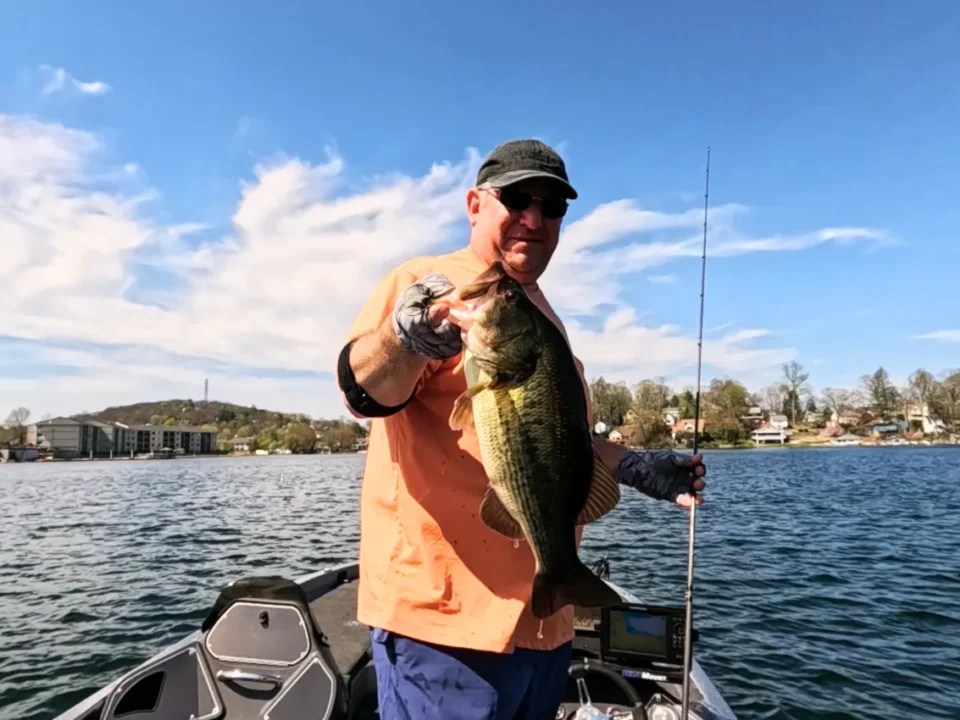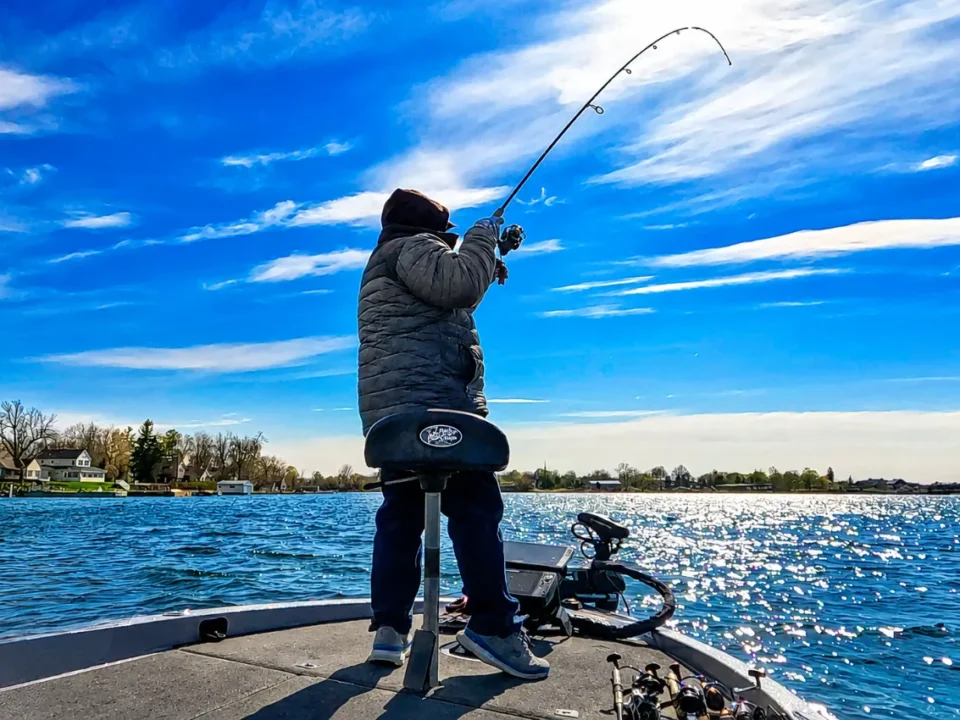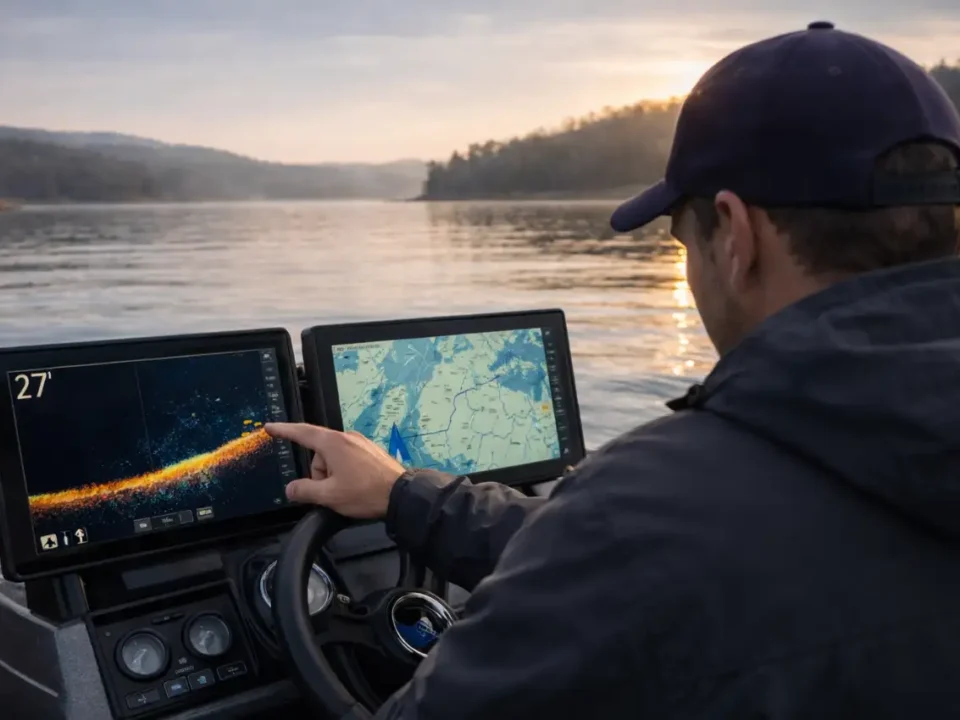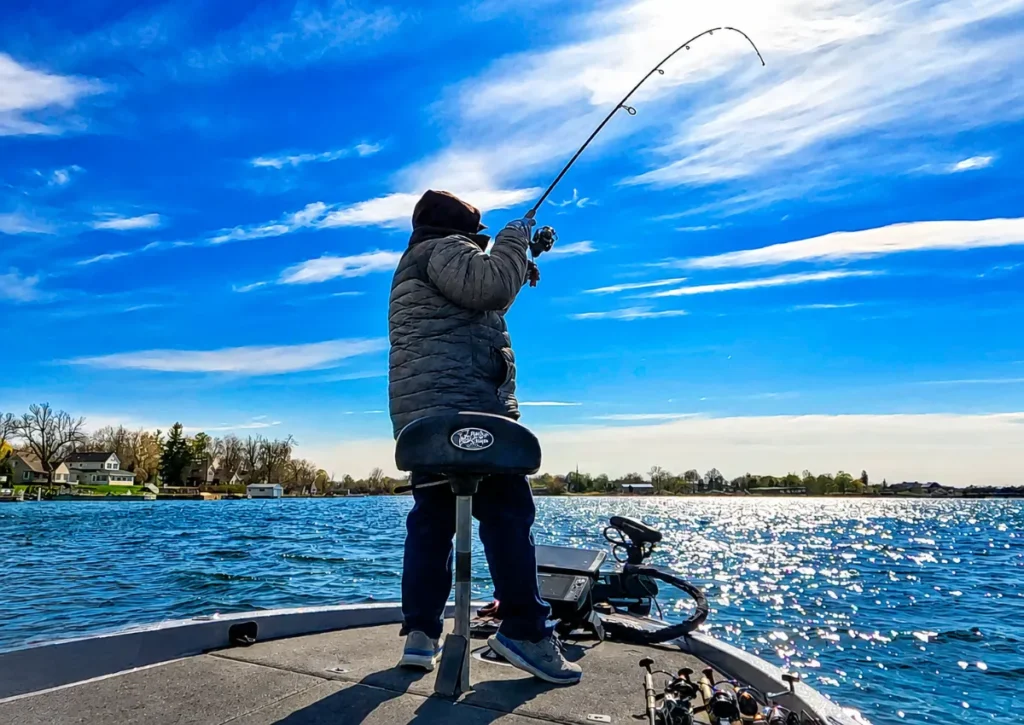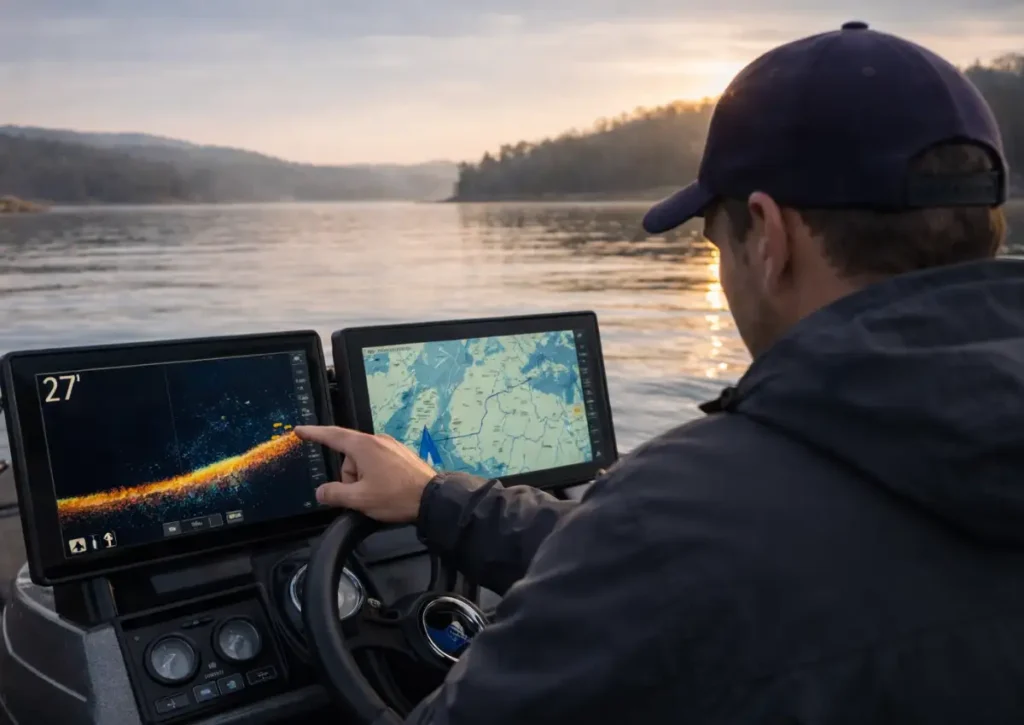
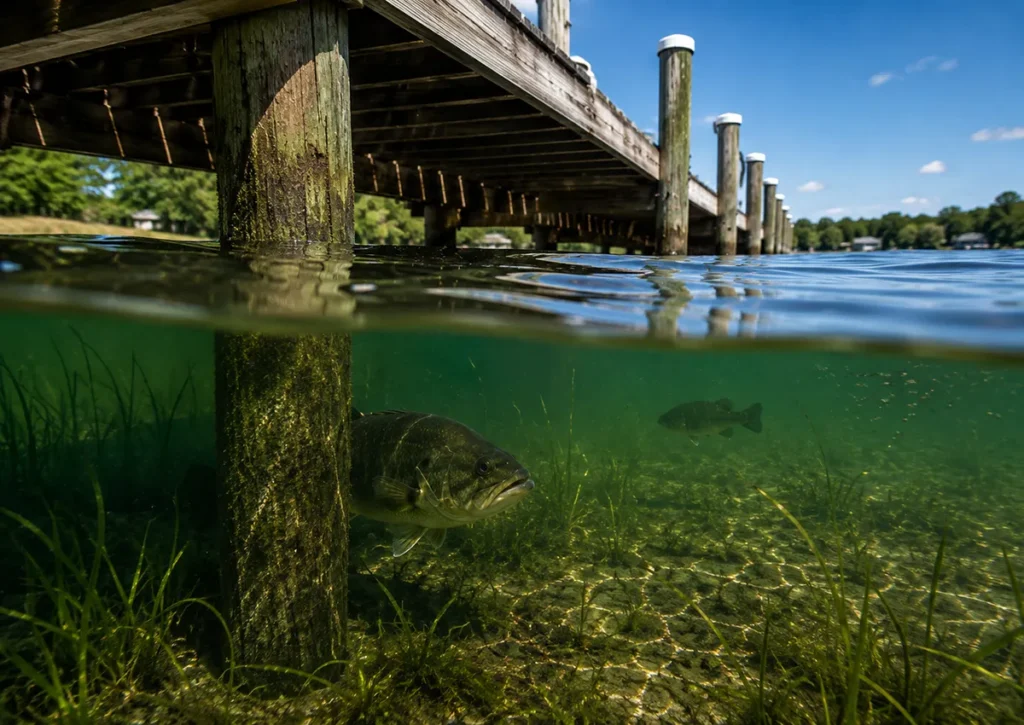
One of the fastest ways to catch more largemouth bass around docks is to stop thinking about individual docks and start thinking about patterns. Every fish you catch is giving you valuable information, and one of the most important clues is the depth where the bite happened.
Instead of randomly pitching to every piece of cover, use each catch to narrow down where largemouth bass are positioning. Once you identify the productive depth, you can duplicate that pattern on similar docks throughout the day and dramatically increase your efficiency.
🎣 BASSIN' USA Tip: Every bass you catch is information. Pay attention to the depth, cover, retrieve, sunlight, and water conditions. The quicker you recognize a pattern, the faster you'll eliminate unproductive water and find more fish.
Why Largemouth Bass Hold at Specific Depths Around Docks
Not every dock is created equal. Largemouth bass are naturally drawn to high-percentage cover such as outside corners, dock posts, walkways, pontoon lifts, ladders, cross braces, brush, bluegill beds, and the darkest shade they can find. Many times, one of these key pieces of cover will produce fish regardless of depth.
However, once you begin noticing that the bass are consistently using those same types of targets in a particular depth range, you've discovered a repeatable pattern. Instead of simply fishing every dock the same way, you're identifying where the highest-percentage cover and the most productive depth intersect. That's when you can begin duplicating the pattern from dock to dock and catch fish much more efficiently.
By identifying that depth, you're no longer just fishing docks, you're learning how to pattern largemouth bass.
Start Shallow, Then Work Deeper
Whenever you approach a new dock, begin by making a few pitches to the shallow inside corners. If nothing happens, gradually work farther toward deeper water. When you finally get a bite, don't just remember the dock, remember the depth. That single clue can unlock the pattern for the rest of the day.
Pattern More Largemouth Bass on Similar Docks
Once you've identified the productive depth, stop fishing every dock from end to end. Instead, focus your casts on that same depth zone around every similar dock you fish. If largemouth bass are consistently holding in five feet of water, there's a good chance they'll continue using that depth on nearby docks with similar conditions.
This approach allows you to cover more water, make more efficient presentations, and catch more largemouth bass without wasting time fishing unproductive areas.
Changing Water Levels Don't Always Change the Pattern
One mistake many anglers make is assuming that when water levels rise or fall, they need to completely change how they fish. While changing water levels certainly reposition bass around cover, they often continue relating to the same depth zone rather than the exact same dock post or piece of structure.
On this particular day, the water level had dropped roughly three to four feet since my previous trip. The bass weren't holding on the same sections of the docks because those areas were now much shallower. Instead, they simply repositioned to stay in approximately five feet of water. Once I recognized they had shifted to the new five-foot depth zone, I was able to duplicate that pattern on dock after dock and continue catching fish.
Think Like a Pattern Fisherman
The best anglers don't simply fish visible cover, they collect clues with every bite. The depth, type of cover, water clarity, retrieve speed, and weather conditions all help build a pattern that can often be repeated throughout the lake.
The sooner you stop fishing individual docks and start fishing the pattern, the more consistent you'll become. Every bass you catch should help answer the question, "Why was this fish here?"
Gear Used
Dock Pitching & Skipping Setup
Lure: Keitech Model 1 Jig, 3/8 oz.
Trailer: Keitech 3.3" Fat Swing Impact (Black)
Line: 16 lb Sunline Fluorocarbon
Rod: G. Loomis GLX 844C MBR 7' Heavy Action
Reel: Shimano Metanium DC
Technique: Dock Pitching & Skipping
Conditions: Water level approximately 3 to 4 feet lower than the previous trip
Camera: GoPro Hero 12 Black
Key Takeaway
Don't just remember where you caught a largemouth bass. Remember the depth, the cover, and the conditions that produced the bite. When you identify a repeatable pattern, you can apply it to similar docks and spend more time catching fish instead of searching for them.