Lake Fork Bass Fishing Destination
Lake Fork, Texas — A Legendary Trophy Bass Fishery
Lake Fork has earned its place among the most famous largemouth bass fisheries in the country. Located in East Texas, the reservoir was developed with trophy bass fishing in mind, and decades later anglers still travel from across the country for the chance to catch the fish of a lifetime.
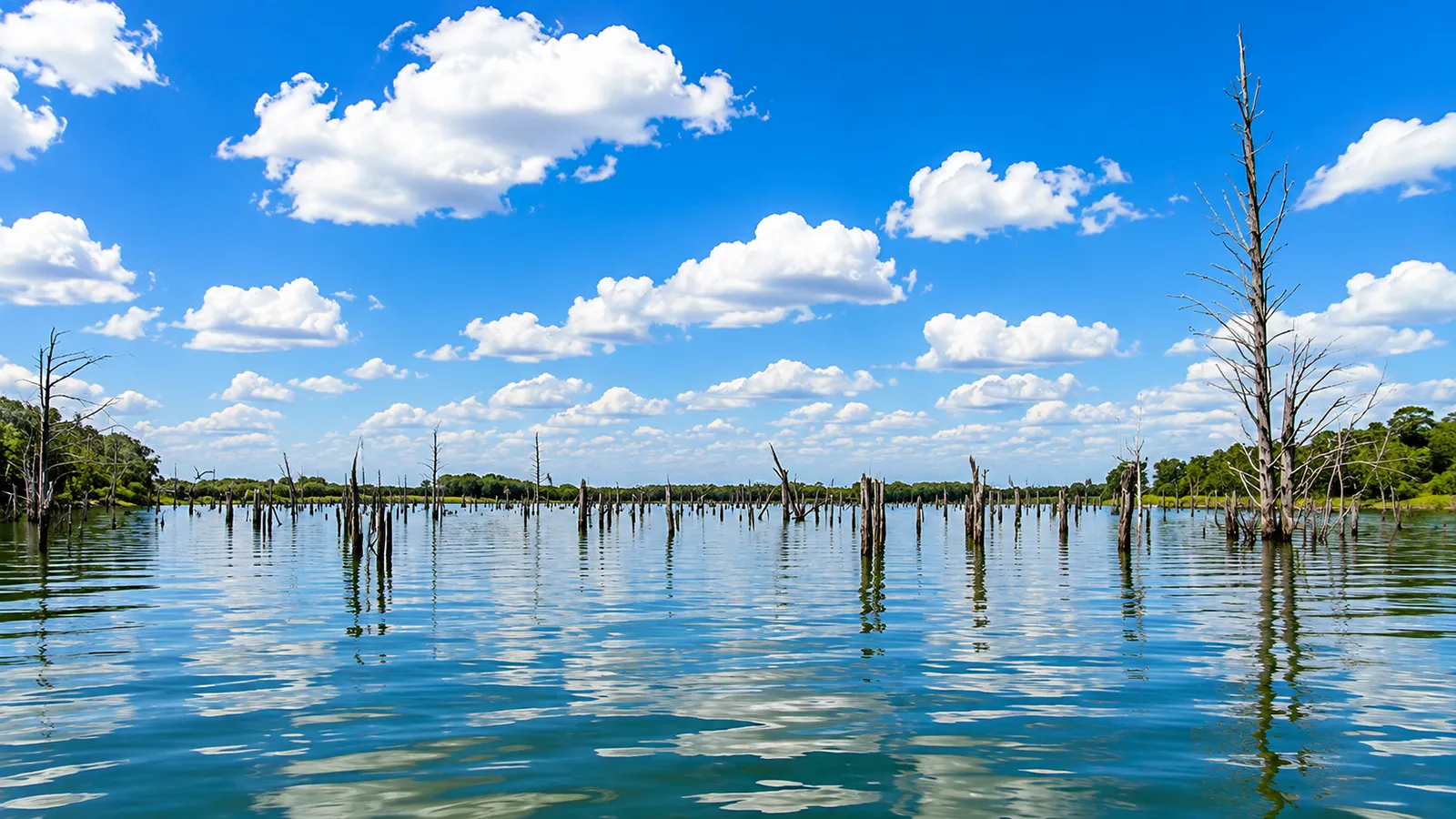
Covering approximately 27,000 acres, Lake Fork offers an incredible variety of bass habitat. Flooded timber is one of the lake's defining features, but anglers will also find creek channels, points, roadbeds, submerged structure, vegetation, docks, and productive shallow-water cover.
Lake Fork's reputation, however, was built on big bass. The reservoir has produced an extraordinary number of Texas' largest largemouth bass, including the current state record, and continues to produce trophy-class fish.
That combination of trophy potential, diverse habitat, year-round fishing opportunities, and decades of bass fishing history has made Lake Fork much more than another Texas reservoir. For anglers looking to experience one of America's truly iconic largemouth bass fisheries, Lake Fork remains a destination that belongs on the list.
Why Lake Fork Is a Premier Bass Fishing Destination
Lake Fork was built for big bass. Before the reservoir was impounded, much of the existing timber and structure was left in place, creating an enormous amount of cover for largemouth bass and the forage they depend on. Combined with a productive East Texas growing season and decades of fisheries management, those conditions helped establish one of the country's most recognized trophy bass fisheries.
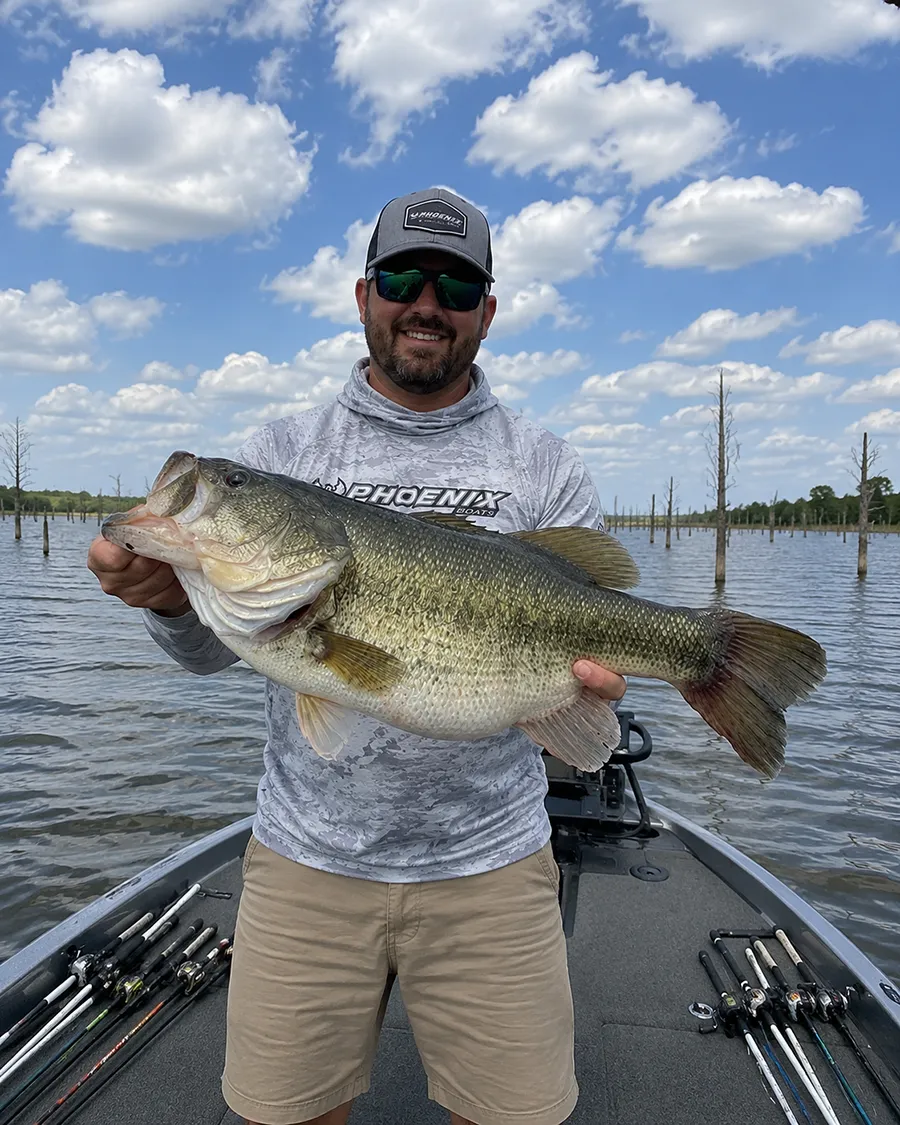
The numbers behind Lake Fork's reputation are remarkable. The reservoir has produced the Texas state-record largemouth bass and an extraordinary share of the biggest bass recorded in the state. Fish exceeding 10 pounds remain a legitimate possibility, which continues to draw anglers hoping to catch a personal best.
Flooded timber may be Lake Fork's signature habitat, but creek channels, submerged roadbeds, points, vegetation, docks, spawning flats, and offshore structure provide productive options throughout the seasons. That combination of trophy largemouth bass, exceptional habitat, and protective regulations has kept Lake Fork near the top of serious bass anglers' destination lists for decades.
Best Times to Fish Lake Fork
Lake Fork offers productive bass fishing throughout the year, but seasonal changes can dramatically affect where largemouth bass position and how they feed. For anglers traveling specifically for the lake's trophy potential, late winter through spring is one of the most anticipated periods of the year.
Late Winter & Prespawn
As water temperatures begin to rise, big female largemouth start moving from deeper winter areas toward creek channels, secondary points, staging cover, and spawning flats. This is prime time for anglers targeting some of Lake Fork's heaviest bass before they move shallow to spawn.
Spring
Spring brings bass into shallow water throughout the reservoir. Flooded timber, vegetation, docks, protected pockets, and other shallow cover become important as fish move through the spawn. Different sections of the lake can progress at different rates, allowing prespawn, spawning, and post-spawn patterns to overlap.
Summer
After the spawn, many bass transition toward deeper structure. Creek channels, points, humps, submerged roadbeds, timber, and other offshore features become increasingly important. Early mornings and periods of active feeding can still produce shallow opportunities before deeper patterns take over.
Fall
Cooling water brings increased baitfish activity and can move bass back toward creeks, coves, points, and shallower cover. Shad become a major part of the equation, and locating concentrations of bait can be one of the keys to finding actively feeding largemouth.
Winter
Cold water generally slows the fishing, but Lake Fork's trophy potential remains. Bass often relate to deeper channels, timber, points, and structure near traditional wintering areas. Slower presentations can be effective, and warming trends may temporarily pull fish toward shallower cover.
Best Overall Window: Late winter through spring offers the strongest combination of trophy potential and shallow-water opportunities, while anglers comfortable fishing offshore structure can find quality bass throughout the warmer months.
Lake Fork Fishing License & Regulations
Anglers fishing Lake Fork must follow Texas fishing license requirements and the special fishing regulations established for the reservoir. Because regulations can change, traveling anglers should always confirm current rules with the Texas Parks and Wildlife Department before their trip.
Texas Fishing License
Anyone fishing public waters in Texas generally needs a valid Texas fishing license with the appropriate freshwater endorsement, unless they qualify for an exemption. Both resident and non-resident fishing license options are available.
Texas Fishing Licenses & Endorsements
Lake Fork Largemouth Bass Regulations
Lake Fork has special regulations designed to help protect the trophy largemouth bass fishery.
- Daily Bag Limit: 5 largemouth bass.
- Protected Slot: Largemouth bass measuring 16 inches or longer but less than 24 inches must be released.
- Trophy Bass: Only one largemouth bass measuring 24 inches or longer may be retained per day.
The protected slot has been an important part of Lake Fork's fisheries management strategy, allowing quality bass to remain in the lake during critical stages of their growth.
Check Regulations Before You Fish
Fishing regulations, license requirements, and special lake rules can change from year to year. Before launching, check the current Lake Fork regulations and Texas Outdoor Annual for the latest requirements.
Key Launch Areas and Travel Hubs
Lake Fork is surrounded by several small East Texas communities, including Emory, Alba, Yantis, and Quitman. Unlike larger destination lakes with one dominant waterfront city, Lake Fork is better approached by choosing a base that puts you close to the section of the reservoir you expect to fish.
For traveling bass anglers, two areas stand out as especially practical:
- Emory / West Lake Fork — A strong all-around base with traditional hotel lodging, restaurants, supplies, and convenient access to the western and mid-lake sections of Lake Fork. Lake Fork Marina & Motel is located on the west arm and offers lodging, ramps, covered slips, tackle, fuel, and boat-friendly amenities in one location.
- Yantis / North Lake Fork — A fishing-focused base surrounded by Lake Fork on three sides, with lakefront marinas, motels, cabins, RV facilities, tackle, restaurants, and convenient access to northern and eastern portions of the reservoir.
Choosing your lodging around the water you plan to fish can save considerable drive and boat time. Lake Fork contains extensive standing timber, submerged structure, creek systems, and long arms, so launching closer to your intended fishing area can make a significant difference during a multi-day trip.
The sections below provide lodging, restaurants, marinas, verified bass-boat launch options, tackle and supplies, and things to do for both Lake Fork travel hubs.

Emory / West Lake Fork — Lodging, Eats, Boating & More
Emory and the west side of Lake Fork make a practical home base for anglers who want convenient access to the western and mid-lake portions of the reservoir. Emory provides traditional hotels, restaurants, groceries, and other everyday supplies, while the surrounding shoreline offers fishing-focused lodges, marinas, ramps, and accommodations designed specifically for anglers traveling with boats.
Places to Stay
- Lake Fork Marina & Motel — One of the most fishing-focused lodging options on Lake Fork. Located about mid-lake on the west arm, the property combines motel rooms, suites, cabins and lodges with two boat ramps, covered slips, tackle, non-ethanol fuel, propane, fish cleaning facilities, and direct lake access. Motel rooms and suites also have outdoor electrical outlets specifically for charging boat batteries.
- Lake Fork Lodge — Waterfront fishing lodge on five private acres with its own boat ramp and fishing pier. Its location on the west side of Lake Fork makes it another strong option for fishing groups wanting to stay close to the water.
- Lake Fork Marina RV Park — Waterfront and off-water RV sites with 30-amp and 50-amp electrical service, water and sewer hookups. Guests also have access to the marina's ramps, covered boat slips, fuel, laundry and other fishing-trip amenities.
VRBO / Airbnb: Emory and the western shoreline of Lake Fork have numerous vacation homes and waterfront rentals. For bass fishing trips, look specifically for properties with adequate truck-and-trailer parking, outdoor electrical access for charging batteries, and private docks or convenient access to a nearby boat ramp.
Places to Eat & Drink
- Sidekicks Family Restaurant — Casual Emory restaurant serving breakfast along with burgers, catfish, chicken-fried steak, sandwiches, and other traditional comfort food.
- Ya'll Come Back Cafe — Small-town breakfast and lunch cafe in Emory with classic country-style breakfast plates and hearty lunch options, useful for an early meal before or after fishing.
- Dos Charros Tex-Mex — Popular Emory option for Tex-Mex, including tacos, enchiladas, fajitas, queso, and other familiar favorites.
- El Manna Tex-Mex — Casual Mexican and Tex-Mex restaurant in Emory offering another convenient dinner option for anglers staying in town.
Marinas & Boating Access
- Lake Fork Marina — Full-service marina positioned about mid-lake on Lake Fork's west arm. Facilities include two launching ramps, covered and lighted boat slips with electrical service for battery charging, non-ethanol gasoline, propane, fishing licenses, tackle, a floating fish-cleaning station, and guest laundry.
- Lakeview Lodge on Lake Fork — Fishing-oriented waterfront property in the Emory area with lodging, RV facilities and direct boat access, providing another convenient option on the western side of the reservoir.
Public Boat Launches
- FM 17 Public Boat Ramp — Free public launch on the Lake Fork Creek arm near the FM 515 bridge. The facility offers a two-lane concrete ramp, courtesy dock, spacious parking area, and restroom, making it a convenient launch for anglers staying around Emory and the west side of Lake Fork.
- West Fork Landing — Lake Fork access point in the Emory area providing convenient boat access to the western portion of the reservoir.
Tackle & Supplies
- Lake Fork Trophy Lures — Bass-focused tackle store and lure manufacturer on US-69 in Emory. A natural stop on the way to Lake Fork for tackle, locally developed bass lures, and fishing supplies.
- Anglers Paradise Tackle & Bait — Local Emory tackle shop on FM 515 carrying bass, crappie, and catfish tackle along with marine electronics service and repair.
- Lake Fork Marina Tackle Shop — Full tackle shop located directly at the marina, particularly convenient for anglers already staying or launching there.
Things to Do When You're Not Fishing
- Downtown Emory — Small-town shopping, restaurants, and local businesses provide an easy change of pace when you're off the water.
- Lake Fork Area — The surrounding countryside and waterfront make it easy to spend a slower afternoon exploring local shops, restaurants, and communities around the reservoir.
- Canton First Monday Trade Days — One of the country's best-known flea markets and shopping events is within reasonable driving distance of Lake Fork and can make a worthwhile side trip for family members traveling with anglers.
Note: Marina services, restaurant hours, lodging policies, and ramp conditions can change. Anglers traveling with a bass boat should confirm trailer parking and electrical access directly with their lodging property before booking.
Yantis / North Lake Fork — Lodging, Eats, Boating & More
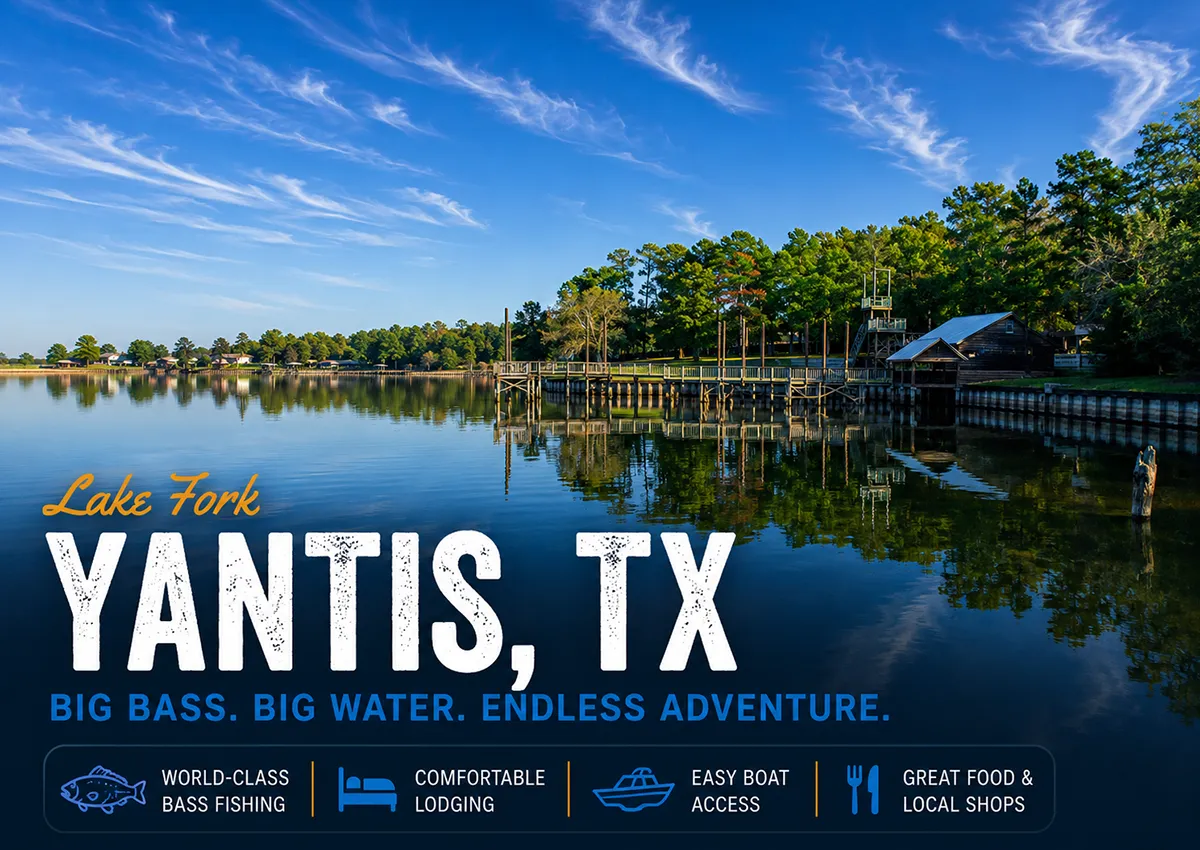
Yantis makes an excellent base for anglers fishing the northern and eastern portions of Lake Fork. The community sits close to several major lake arms and offers fishing-focused lodging, marinas, tackle, restaurants, and convenient boat access. For anglers who want to spend less time driving and more time on the water, Yantis is one of the most practical places to stay around Lake Fork.
Places to Stay
- Quail Hollow Motel & RV Park — Fishing-focused waterfront property in Yantis offering renovated motel rooms, RV sites, two boat ramps, wet slips, fishing piers, dry boat storage, a store with ice, and dedicated charging stations. The combination of lodging, boat access, and charging facilities makes it particularly convenient for traveling bass anglers.
- Lake Fork Getaways — Yantis lodging geared toward Lake Fork visitors and fishing trips, with cabins and other accommodations near the Caney Point area. Its location provides convenient access to the eastern side of the reservoir and the major public launch on Highway 154.
- G&G Waterfront Lodging — Fishing-oriented waterfront lodging in Yantis with direct Lake Fork access, a private boat ramp, covered fishing dock, boat slips, and accommodations suited to anglers who want to keep their boat close to where they're staying.
- Kelley's Lake Fork Cottage — Smaller waterfront lodging option in the Yantis area with a quiet lakeside setting and fishing-focused amenities, providing an alternative to larger motel and resort properties.
VRBO / Airbnb: Yantis and the northern Lake Fork shoreline have a good selection of waterfront homes, cabins, and vacation rentals. Anglers bringing a bass boat should look specifically for adequate truck-and-trailer parking, outdoor electrical access for charging batteries, and either private dock access or a convenient route to one of the area's major ramps.
Places to Eat & Drink
- Yantis Cafe — Casual local breakfast and lunch stop serving omelets, biscuits, burgers, grilled chicken, salads, meatloaf, hamburger steaks, and other straightforward comfort food. A practical early-morning option before heading to the lake.
- GoFish Lures, Tackle Store & Cafe — Particularly useful for anglers because it combines breakfast and lunch with a fishing tackle store. Located on Highway 154 in Yantis, it's an easy stop for food and last-minute fishing supplies on the way to the water.
- Jacky's Pub Restaurant at The Links at Land's End — Lake Fork dining option at the golf course offering appetizers, salads, entrees, and a more relaxed sit-down meal when you're finished fishing for the day.
Marinas & Boating Access
- Quail Hollow — Waterfront Yantis facility with two boat ramps, 12 wet boat slips, three fishing piers, dry boat storage, ice, and six charging stations. Its combination of lodging and boating facilities makes it a useful all-in-one base for anglers fishing this side of Lake Fork.
- Caney Point Recreation Area — Major Sabine River Authority access facility on the eastern fork of Lake Fork near Highway 154. The modern six-lane launch and large parking area are designed to handle substantial boat traffic and make this one of the strongest access points for anglers and tournaments on this side of the reservoir.
Public Boat Launches
- Caney Point Recreation Area / SRA Six-Lane Boat Ramp — Large public launch near the Highway 154 bridge with six concrete launching lanes, docks, substantial truck-and-trailer parking, restrooms, and convenient access to the eastern portion of Lake Fork. Its capacity makes it particularly useful during busy weekends and tournament mornings.
- FM 515 East Public Boat Ramp — Free public Lake Fork launch near Yantis at the Highway 515 crossing of Caney Creek. This ramp provides convenient access to the Caney Creek arm and nearby main-lake water.
Tackle & Supplies
- GoFish Lures, Tackle Store & Cafe — Fishing store on Highway 154 in Yantis carrying tackle and everyday fishing-trip supplies while also serving breakfast and lunch. Its location makes it especially convenient for anglers heading toward the Highway 154 and Caney Point launch areas.
- Quail Hollow Store — On-site store at Quail Hollow providing ice and basic supplies for guests staying or launching at the property.
Things to Do When You're Not Fishing
- The Links at Land's End — Scenic golf course located on a peninsula extending into Lake Fork. The property also offers lodging and dining, making it one of the better off-the-water recreation options around Yantis.
- Lake Fork Shoreline & Recreation — Yantis is very much a lake-oriented community, so much of the area's appeal remains centered around the water. The shoreline, public recreation areas, and surrounding East Texas countryside provide easy options for a slower afternoon away from fishing.
- Nearby Quitman — A short drive from Yantis provides additional restaurants, shopping, groceries, and other services for anglers or family members looking for more options away from the lake.
Note: Marina services, restaurant hours, lodging policies, and ramp conditions can change. Anglers traveling with a bass boat should confirm trailer parking and electrical access directly with their lodging property before booking.
What Makes Lake Fork Different
Lake Fork wasn't simply discovered as a great bass lake, it was built to become one. Before the reservoir filled, much of the standing timber, creek channels, vegetation, and other fish-holding cover was intentionally left in place. Combine that habitat with decades of fisheries management and Texas' trophy-bass conservation efforts, and you have one of the most famous largemouth bass fisheries in the country.
That reputation is backed by the record book. Lake Fork has produced an extraordinary number of Texas' heaviest largemouth bass, including the current state-record fish, an 18.18-pound giant caught in 1992. The reservoir continues to produce trophy-class bass while supporting a strong population of quality fish across a wide range of sizes.
A Lake Built Around Bass Habitat
Lake Fork's defining feature is cover. Submerged timber, standing trees, creek channels, points, roadbeds, bridges, vegetation, docks, and other structure create an enormous amount of productive bass habitat. For visiting anglers, that also means there is rarely just one way to fish the lake successfully.
Texas Trophy Bass Management
Lake Fork has played an important role in Texas' trophy-bass management history and the Toyota ShareLunker program. Exceptional largemouth bass from the reservoir have contributed to fisheries research and selective breeding efforts designed to improve bass fishing throughout Texas.
A True Bass-Fishing Community
The communities surrounding Lake Fork have grown alongside its fishing reputation. Marinas, tackle shops, lodging properties, restaurants, boat ramps, and fishing-focused businesses are spread around the reservoir, making multi-day trips relatively easy to plan. You're not simply visiting a lake that happens to have bass, you're visiting an area where bass fishing is part of the local identity.
Plan Your Lake Fork Fishing Trip
Lake Fork is a destination where a little preparation goes a long way. The reservoir covers a large area, contains extensive standing timber and submerged structure, and offers numerous ramps and lodging options around the lake. Choosing the right base can save time both on the road and on the water.
For most traveling anglers, Emory / West Lake Fork and Yantis / North Lake Fork provide two of the most practical travel hubs. Emory works well for anglers fishing the western and mid-lake portions of the reservoir, while Yantis provides convenient access to the northern and eastern sections.
Choose Your Base Around the Water You Want to Fish
Lake Fork's long creek arms, standing timber, and winding shoreline can make travel around the reservoir slower than it appears on a map. Before booking lodging, consider which portion of the lake you expect to fish and choose accommodations near a launch that puts you close to that water.
If you're bringing your own bass boat, confirm adequate truck-and-trailer parking and access to electrical outlets for overnight battery charging. Many Lake Fork lodging properties are fishing-focused, but amenities can vary considerably from one property to another.
Respect the Timber
Standing and submerged timber is one of Lake Fork's defining features. It creates incredible bass habitat, but it also demands attention when navigating unfamiliar water. Marked boat lanes are important, and anglers should use caution when leaving established routes, especially when water levels are lower.
Plan Around Seasonal Fishing Pressure
Late winter and spring attract anglers from across the country because of Lake Fork's trophy-bass potential. Tournament weekends and peak spawning periods can increase demand for lodging, ramps, restaurants, and marina services.
If you're planning a spring trip, reserve accommodations early and expect more activity at popular launches during prime morning hours.
Come Prepared to Fish Multiple Patterns
Flooded timber may be Lake Fork's signature cover, but successful anglers often move between shallow vegetation, docks, points, creek channels, submerged roadbeds, timber, and offshore structure as conditions change.
Bringing tackle that allows you to comfortably fish both shallow cover and deeper structure gives you more options when weather, water level, fishing pressure, or seasonal movement changes the pattern.
Before You Go
- Review current Texas fishing license requirements and Lake Fork regulations.
- Check weather, wind, and current reservoir conditions.
- Confirm lodging policies for boat and trailer parking.
- Verify electrical access if you need to charge boat batteries overnight.
- Check current boat ramp conditions and lake levels.
- Look for major tournaments scheduled during your trip.
- Confirm marina, tackle shop, and restaurant hours before traveling.
Whether you're coming to Lake Fork chasing a personal-best largemouth, fishing a tournament, or simply experiencing one of the most storied trophy bass lakes in the country, planning ahead gives you more time to focus on the reason you came, fishing.