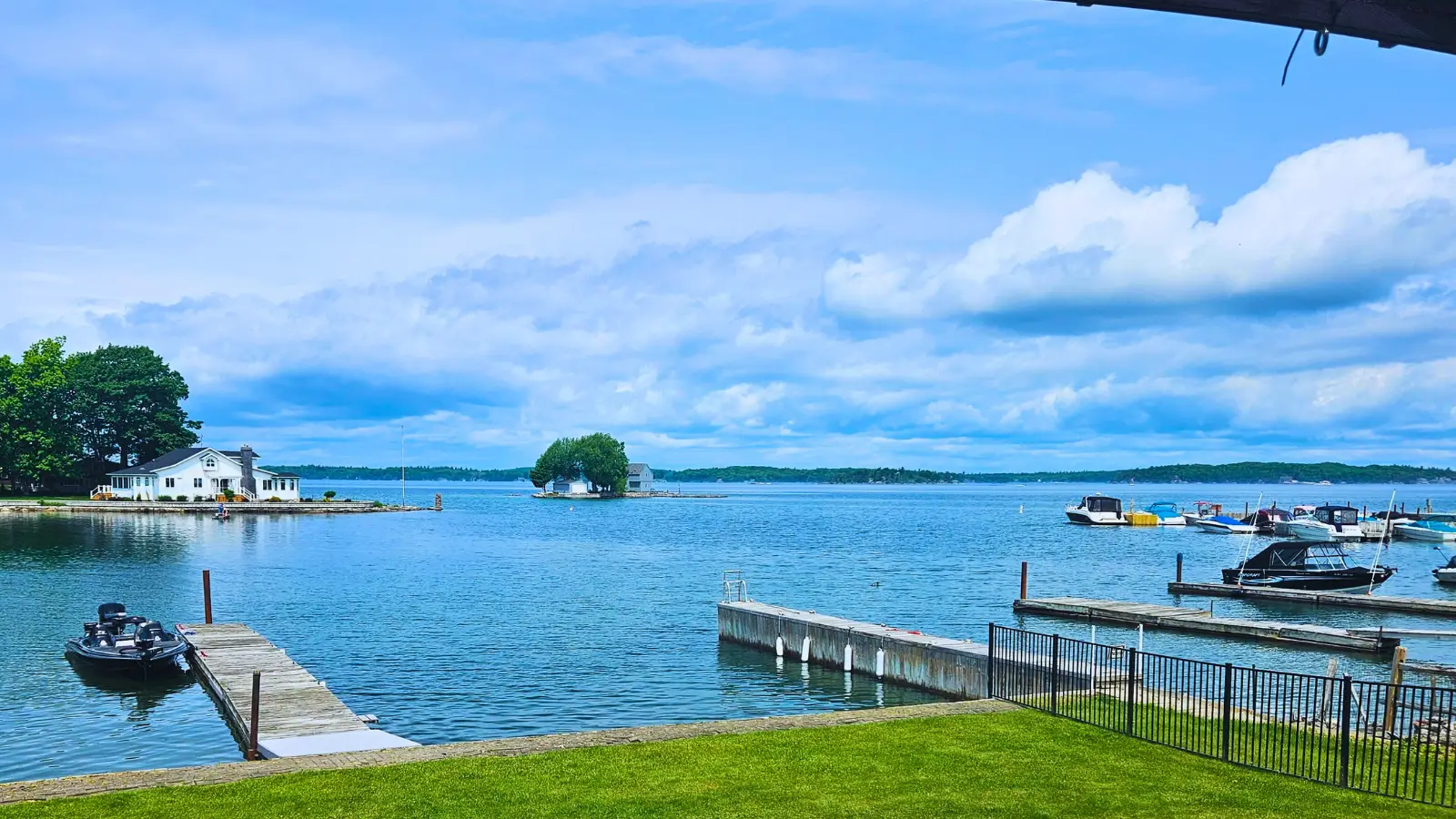
St. Lawrence River Bass Fishing Destination
The St. Lawrence River isn’t just a productive smallmouth fishery — it’s one of the most respected bass destinations in North America.
Stretching along the northern border of New York through the Thousand Islands region, this vast, current-driven system consistently produces the kind of weights that make serious anglers take notice. Twenty-five pound five-fish bags are realistic. Five-pound smallmouth aren’t rare. And on the right day, the river reminds you why it’s considered a true bucket list destination.
This is big water. Wind matters. Current positioning matters. Preparation matters. But for anglers willing to learn it, the payoff is unforgettable.
Why the St. Lawrence River Is a Bucket List Smallmouth Fishery
Few places in North America combine size, consistency, and scenery the way the St. Lawrence River does.
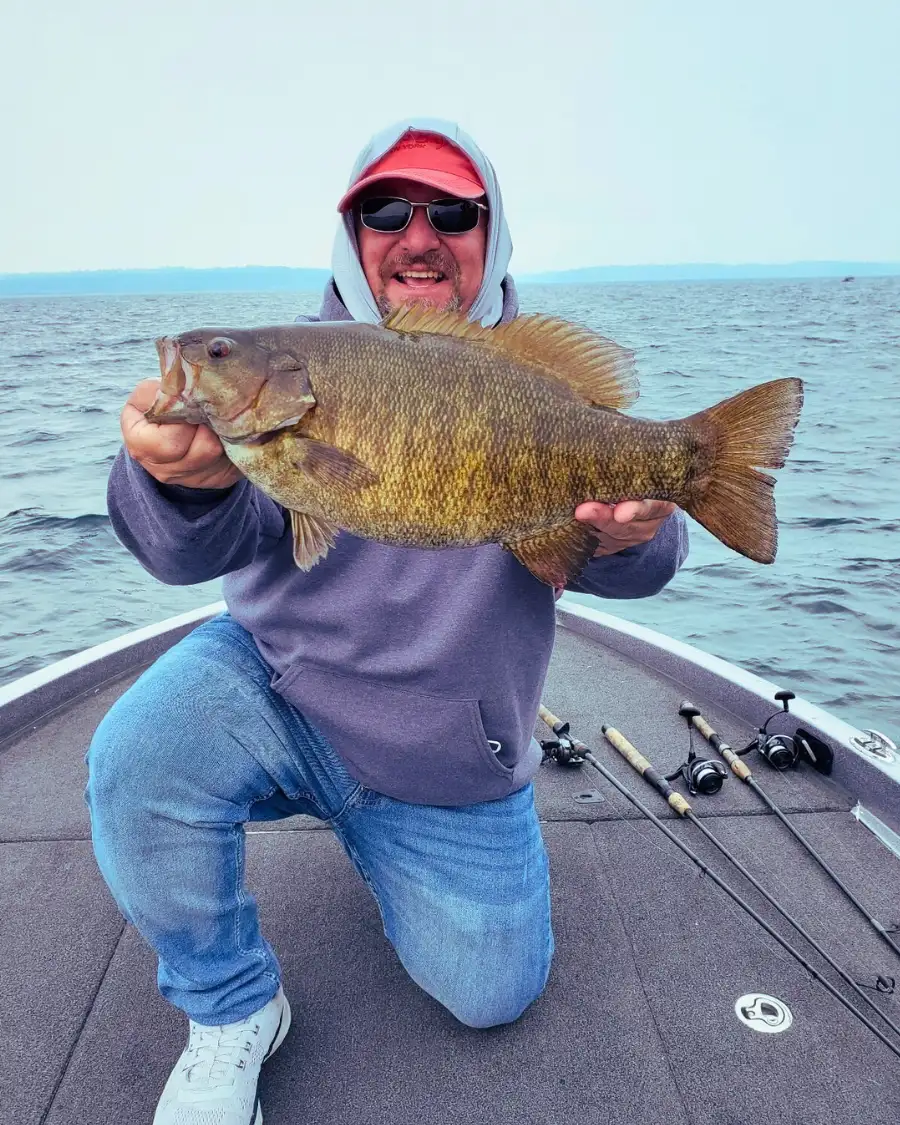
This isn’t a small lake with one productive stretch. It’s a massive, current-driven system with endless structure — shoals, rock piles, humps, and transition areas that reload year after year. The forage base is strong. The fish grow fast. And the average size alone separates it from most fisheries in the country.
Tournament history reinforces what anglers already know. Bags over 25 pounds are common during the right windows. Five-pound smallmouth are realistic goals, not once-in-a-lifetime accidents. And when conditions line up, the river can produce numbers and size in the same day.
It’s not just good — it’s proven.
Best Times to Fish the St. Lawrence River
The St. Lawrence River fishes differently throughout the year, and timing matters — not just for seasonal patterns, but for weather, pressure, lodging availability, and overall experience. Understanding the full seasonal picture helps anglers decide not only when to come, but how to plan.
Early Ice-Out (Pre-Season Window)
For serious trophy hunters, the early ice-out period before the New York bass season opens can produce some of the biggest smallmouth of the year.
As water temperatures begin to climb and fish move toward pre-spawn staging areas, giant smallmouth can be caught in predictable zones. This is a window that experienced anglers quietly circle on the calendar.
However, it comes with trade-offs.
Cold fronts are common. Rain, wind, and unstable conditions are part of the equation. This is not a comfort-trip season — it’s a calculated move for anglers chasing size.
Because the official New York bass season is still closed during this period, anglers must understand and follow current regulations carefully. Many choose to stay on the New York side while legally fishing Canadian waters during Ontario’s open season. Knowing which side of the border you are fishing is critical.
There are additional considerations:
• Fewer restaurants and seasonal businesses are open in early spring.
• Some marinas may still be limited in services.
• Lodging rates are typically lower.
• Fishing pressure is dramatically lighter than after opening day.
For anglers willing to watch the forecast and pick their windows, this can be one of the most rewarding periods of the entire year.
Opening Day Through Post-Spawn
From the New York opener on June 15 through the post-spawn period, the St. Lawrence River comes alive.
While it’s typically not peak spawn timing this far north, there are still plenty of smallmouth on beds depending on the year and water temperature trends. Some fish will remain shallow in protected areas, while others begin transitioning toward early summer structure. It’s a dynamic window where anglers can encounter visible spawners, cruisers guarding fry, and the first wave of fish sliding toward offshore shoals and current seams.
This stretch of the season draws anglers from across the country. The combination of shallow opportunity, aggressive fish, and national tournament attention increases boat traffic — particularly around well-known spawning flats and community shoals.
The fish are still there. There are more than enough to go around. But anglers should expect company, especially on weekends and during major event weeks.
Accommodations during this period book quickly. Many returning anglers reserve their lodging when they check out the previous year, or at minimum during the fall. Waiting until spring can significantly limit options in Clayton, Alexandria Bay, and Ogdensburg.
Opening season on the St. Lawrence carries energy. It carries anticipation. It carries pressure. Planning ahead — both on the water and off — makes the difference between scrambling and capitalizing.
Summer Offshore Pattern (Late June Through August)
Once post-spawn patterns settle and fish transition to deeper structure, the St. Lawrence shifts into its most stable and consistent phase.
Smallmouth position on offshore shoals, rock transitions, current seams, and deeper humps. Electronics become a major factor. Boat control in current becomes critical. This is where experienced anglers separate themselves.
Stable weather windows create long runs and expanded options. While wind remains the biggest variable on this river, summer generally offers predictable fishing for anglers comfortable offshore.
Pressure remains steady, but the vast size of the system allows anglers to spread out.
For many traveling anglers, this is the safest balance of:
• Good weather
• Consistent bite
• Fully open seasonal businesses
• Reliable marina services
Fall Transition (September – October)
As water temperatures begin to drop, smallmouth feed aggressively and group up. This can be one of the heaviest bag periods of the season.
Wind becomes more influential in the fall, and daylight shortens, but fishing pressure often decreases compared to early summer. The river feels less crowded, and quality fish remain active.
Fall offers a strong combination of:
• Big-fish potential
• Reduced pressure
• Scenic conditions
• Fully operational infrastructure
It’s a favorite window for anglers who prefer fewer boats and cooler conditions.
A Final Word on Timing
The St. Lawrence River rewards anglers who understand not just seasonal fish movements, but seasonal realities.
Weather patterns, tourism cycles, border regulations, business openings, and booking windows all factor into trip success.
Always confirm current regulations before traveling, and plan your lodging well in advance — especially for opening season and peak summer periods.
The right timing turns a good trip into a great one.
Licensing and Regulations
The St. Lawrence River is an international waterway, and anglers must follow the licensing and seasonal regulations that apply to the side of the border they are fishing. Requirements differ between New York (U.S.) waters and Ontario (Canadian) waters, and enforcement is active on both sides.
New York (U.S.) Waters
A valid New York State freshwater fishing license is required to fish the U.S. side of the St. Lawrence River.
Black bass season runs from June 15 through November 30. From December 1 through June 14, targeting bass, including catch and release, is prohibited in this region. Anglers must also follow current size limits and daily possession limits as set by the New York State Department of Environmental Conservation (NYS DEC).
New York fishing licenses can be purchased online through the official NYS DEC licensing system or through authorized license vendors.
Ontario (Canadian) Waters
A valid Ontario fishing license is required to fish Canadian waters of the St. Lawrence River.
Bass season is governed by Ontario's Fisheries Management Zone 20 regulations. Smallmouth and largemouth bass season typically opens the fourth Saturday in June and runs through late fall, subject to annual regulation updates. Size limits and possession limits may differ from New York regulations.
Ontario fishing licenses can be purchased online through the Government of Ontario's official fishing license information and licensing system.
Always confirm current season dates, limits, and licensing requirements before traveling, as regulations can change from year to year.
Key Launch Areas and Travel Hubs
Access to the river is centered around three primary hubs: Clayton, Alexandria Bay, and Ogdensburg.
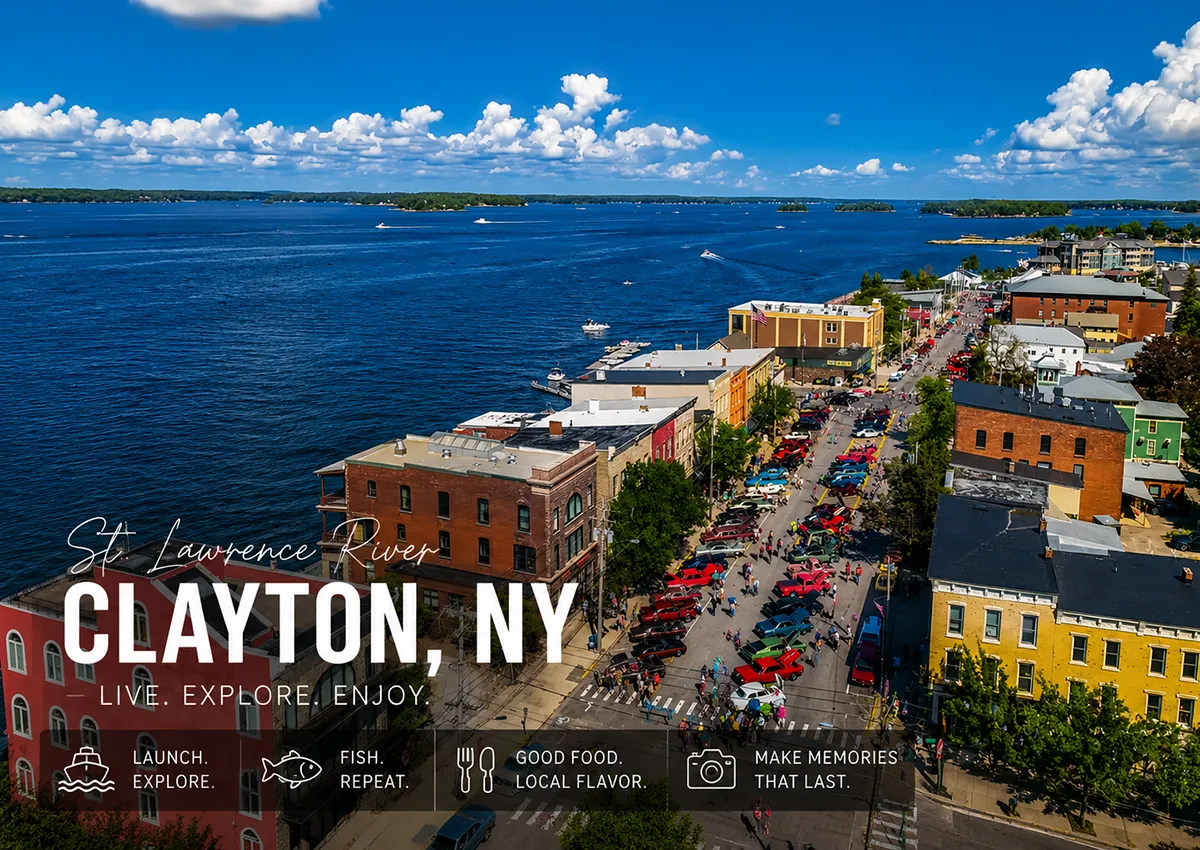
Clayton, NY offers strong marina infrastructure, multiple launch options, lodging, restaurants, and quick access to productive water throughout the Thousand Islands region.
Alexandria Bay, NY provides a more tourist-oriented setting with solid boating access, making it a good option for anglers combining fishing with family travel.
Ogdensburg, NY provides access to the upper St. Lawrence River with public launch facilities, marina services, waterfront lodging, and direct access to productive current-oriented bass water.
Each launch area gives access to different sections of the system, and wind direction can significantly affect run distance and fishable water on any given day.
Clayton, NY — Lodging, Eats, Boating & More
Clayton, NY - Official Town Website
Places to Stay
- 1000 Islands Harbor Hotel — Riverside resort right in town with strong amenities and walkability.
- West Winds Motel & Cottages — Classic Clayton stay option with cottages for groups.
- Fair Wind Lodge — Comfortable lodge-style rooms convenient to the river.
- Mil’s Motel & Cottages — Straightforward, angler-friendly lodging option.
- K’s Riverview Motel & Cottages — Riverside lodging within reach of downtown Clayton.
Rental homes: VRBO and Airbnb are great options in Clayton if you want a house, cottage, or waterfront setup for a group trip.
Places to Eat & Drink
- Bodega 524 — Popular casual spot in town and a great stop after fishing.
- The Boat Yard at French Bay — Waterfront dining and a classic Clayton vibe.
- O’Brien’s Restaurant & Bar — Local bar-and-grill style spot for a solid meal.
- Clipper Inn — Riverside dining, with seasonal hours that may apply.
- Saint Lawrence Spirits Château — Scenic stop for food and drinks. Check seasonal operations.
Marinas & Boat Launches/Access
- French Creek Marina & Campground – Full-service marina with its own boat launch ramp, dockage, fuel, propane, engine repairs, pump-outs, parts inventory and camping options.
- Islander Marina — Full-service marina in Clayton offering dockage and marine services.
- Clayton Harbor Municipal Marina – Municipal marina offering public dockage, floating slips, restrooms, showers, pump-outs, water and Wi-Fi with convenient access to the main channel of the St. Lawrence River.
- Grass Point State Park Boat Launch — New York State Parks boat launch on the St. Lawrence River with marina access, offering a practical public launch option in the Clayton area.
Official Launch Information: Grass Point State Park – New York State Parks
Gear, Tackle & Supplies
- Thousand Islands Bait Store – Local go-to tackle and fishing supply shop with a wide variety of terminal tackle, live bait, NYS and Canadian fishing licenses, drinks, ice, snacks, apparel, and essentials for a St. Lawrence River fishing trip; must-stop before heading out on the water.
Things to Do (Non-Fishing)
- Antique Boat Museum — One of the best-known attractions in Clayton.
- Clayton Island Tours — Personalized journey along the picturesque St. Lawrence River.
- Wellesley Island State Park — Nearby state park with trails, camping, and scenic views.
- Visit 1000 Islands — Clayton — Local events, shopping, and seasonal updates.
- Riverside Dr. — Local galleries, boutiques, and waterfront walking paths.
Note: Many businesses in the Thousand Islands region run seasonal hours. In early spring and late fall, confirm restaurant and marina availability before your trip.
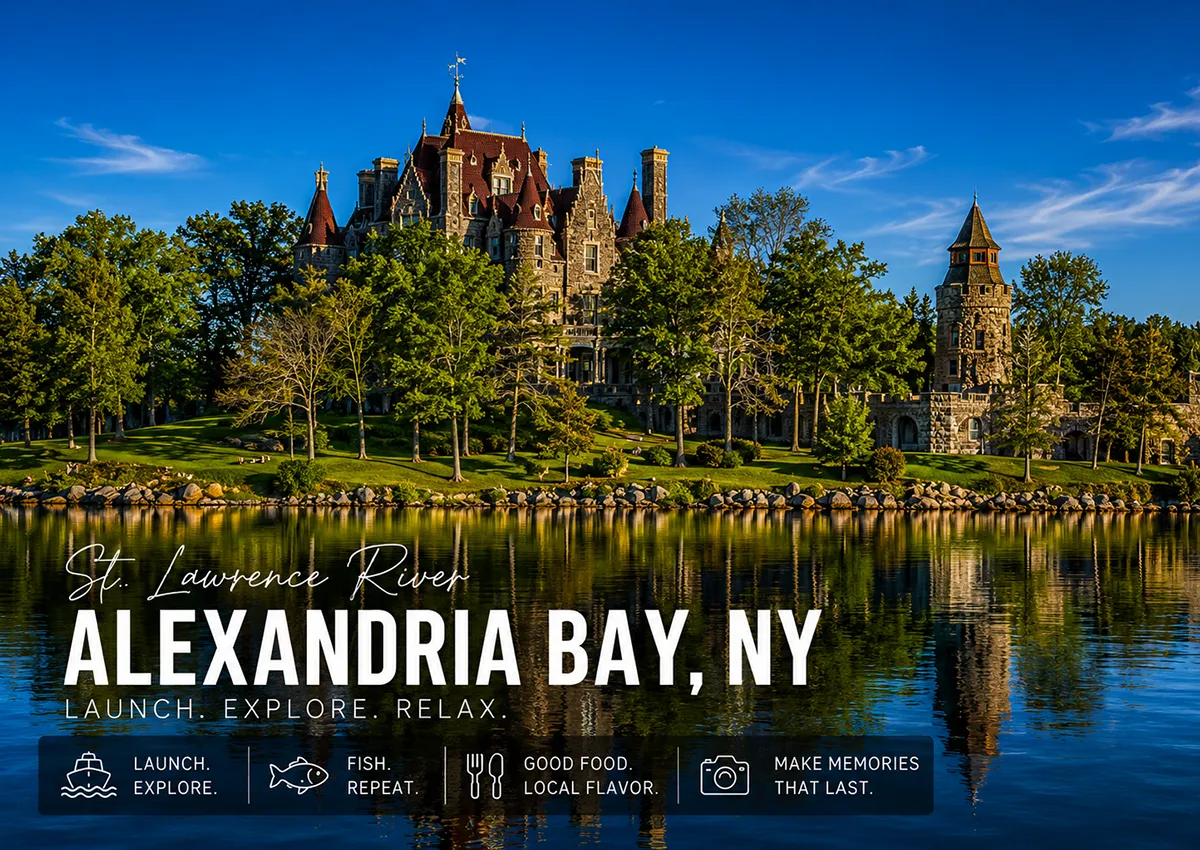
Alexandria Bay, NY — Lodging, Eats, Boating & More
Village of Alexandria Bay Website
Places to Stay
- Riveredge Resort — Waterfront resort in downtown A-Bay with docks nearby and easy access to the main river channel.
- Capt. Thomson’s Resort — Classic waterfront stay on the bay with dock options and a short run to key Thousand Islands structure.
- The Ship Motel — In-town lodging close to village docks, restaurants, and quick morning launches for tournament-style days.
- Rock Ledge Motel & Cottages — Quiet motel and cottage setup just outside town, practical for trailered boats and early starts.
- Otter Creek Inn — Creekside lodging with dockage and proximity to village ramps, helpful for anglers who want easy water access.
- Capt.’s Inn & Suites — Family-friendly seasonal motel with dockage and space to spread out, useful for multi-angler trips.
- Swan Bay Resort & Marina — Resort lodging with marina services on the river, a solid base for exploring the islands and nearby bays.
For longer stays, especially peak summer weeks, VRBO and Airbnb are also viable options in and around Alexandria Bay and Wellesley Island.
Places to Eat & Drink
- Blu Anchor Restaurant & Bar — Reliable in-town spot for breakfast or a post-fishing meal, close to the waterfront and docks.
- Cavallario’s Steak & Seafood — Classic dinner stop in the village, convenient for anglers staying downtown.
- Riverboat Bar / Riverhouse Restaurant — Downtown food and drinks with a lively atmosphere during the season, easy walk from the waterfront.
- PJ’s River Rat Cafe — Well-known river corridor stop with hearty meals, useful if you’re staging between A-Bay and Clayton.
- Thousand Islands Winery — Tasting room and events option for off-the-water downtime, a good family-friendly add-on.
- Dark Island Spirits — Local distillery tasting room in town, an easy evening stop after a long day on the river.
- Riveredge Resort Dining — On-site restaurant option that keeps you close to the water and walkable downtown access.
- Gal's Place — Popular local ice cream stop and an easy treat after a day on the river.
Marinas & Boating Access
- Carnegie Bay Marina & Boat Launch — Sheltered marina within walking distance of downtown Alexandria Bay with a boat launch, trailer parking, transient dockage and other services.
- Carnegie Bay Marina – Map & Launch Location — Direct Google Maps location for the marina and launch.
- Swan Bay Resort & Marina — Slip options and marina services with direct river access for anglers covering island chains and bays.
- Keewaydin State Park Marina — NYS Parks marina with boat launching, docking and sheltered access to the St. Lawrence River.
Public Boat Launches
- Keewaydin State Park Boat Launch — Direct Google Maps pin to the launch ramp at Keewaydin State Park, just west of Alexandria Bay.
- Keewaydin State Park – Official NYS Parks Information — Official park information for launch access, marina services, fees and seasonal operations.
- Grass Point State Park Boat Launch — Nearby public state park launch with good access and parking, useful for anglers staying in the Alexandria Bay area.
- Grass Point State Park – Official NYS Parks Information — Official park information for the marina, boat launch and seasonal operations.
- Alexandria Bay Village Boat Launches — The Village identifies Holland Street and Crossmon Street Extension as boat launch sites. Trailer parking arrangements should be confirmed with the Town of Alexandria before relying on these for a full-size bass boat and trailer.
- Wellesley Island State Park Boat Launches — State-run launch access offering another option for anglers fishing the Thousand Islands area.
Tackle Stores / Fishing Supplies
- Thousand Island Bait Store — One-stop tackle and bait shop on Route 12 with gear depth that fits serious St. Lawrence bass trips.
- Fishers Landing Resort Gas & Bait Shop — Live bait and basic tackle plus dock service, useful for a quick resupply on the corridor.
- Woody’s Bait, Tackle & Firewood — Local bait-and-tackle stop near Wellesley Island patterns, good for last-minute bait and essentials.
Things to Do (Non-Fishing)
- Boldt Castle & Yacht House — The signature Alexandria Bay attraction, located on Heart Island and accessible by tour boat or private boat.
- Uncle Sam Boat Tours — Scenic Thousand Islands cruises departing from Alexandria Bay, with several routes that include or connect with Boldt Castle.
- Minna Anthony Common Nature Center — Nature center and trail system on nearby Wellesley Island, a good option for families or a break between fishing days.
- Wellesley Island State Park — Camping, trails, river views and outdoor recreation within easy reach of Alexandria Bay.
- Scenic View Park — Waterfront park in Alexandria Bay with walking access, river views, sunset scenery and views toward Boldt Castle.
- Alex Bay 500 Go-Karts — Family-friendly activity in town when you need a break from the water.
- Explore Alexandria Bay & the 1000 Islands — Regional visitor information covering attractions, events, cruises and seasonal activities around Alexandria Bay.
Note: Many Thousand Islands businesses operate seasonally; confirm hours and availability before traveling.
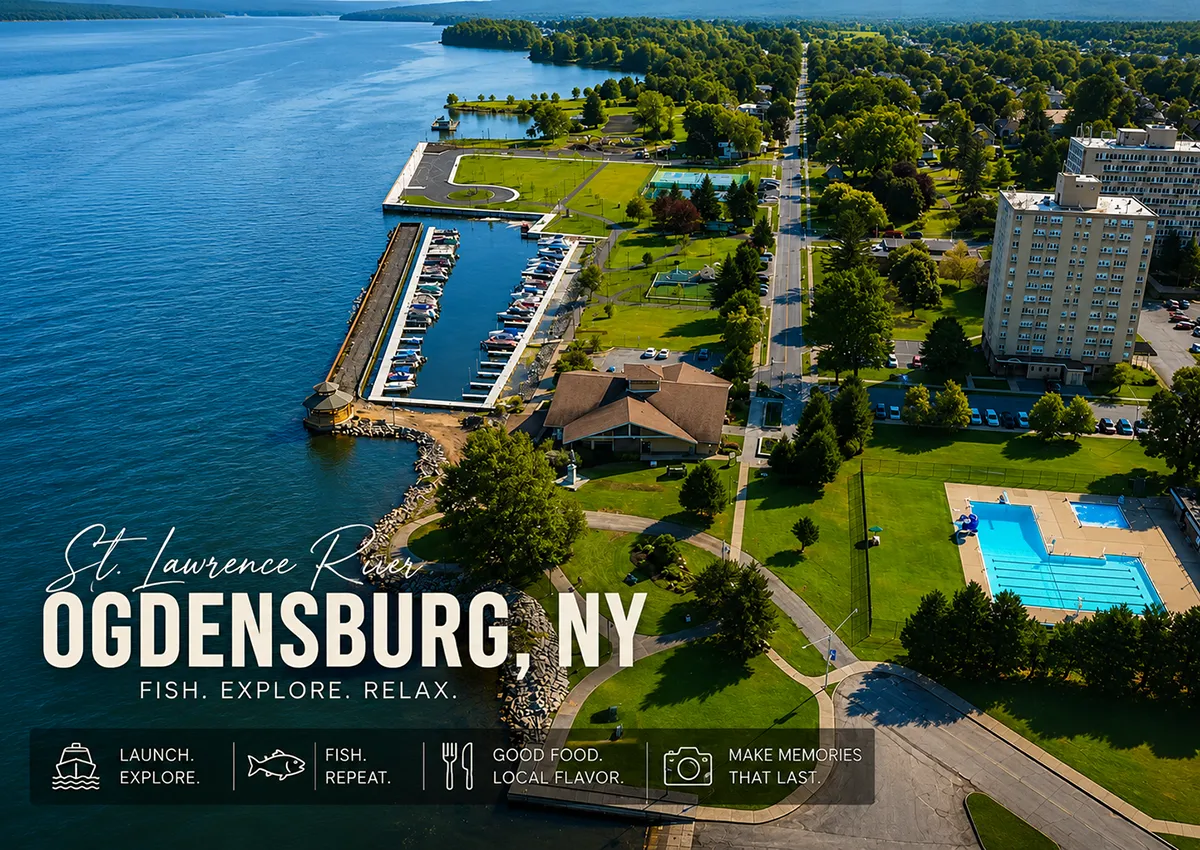
Ogdensburg, NY — Lodging, Eats, Boating & More
Ogdensburg, NY - Official City Website
Places to Stay
- Windjammer Lodge — Riverfront lodging directly on the St. Lawrence with its own boat launch, making it especially convenient for anglers who want to keep daily trailering to a minimum.
- Gran-View on the River — St. Lawrence River lodging with private river-view balconies, an on-site restaurant and a four-bedroom cottage option for larger groups.
- Stone Fence Inn & Suites — Established Ogdensburg lodging on State Highway 37, convenient to the river, downtown and Paterson Street launch access.
- Sherman Inn Bed & Breakfast — Historic B&B in the heart of Ogdensburg, just minutes from the St. Lawrence River and downtown.
Rental homes: VRBO and Airbnb are also worth checking in and around Ogdensburg for groups that need kitchens, additional space and room for boat-trailer parking.
Places to Eat & Drink
- Smuggler's Cafe at Hosmer's Marina — Waterfront dining at the marina, convenient for anglers who want food, fuel, bait and boating services in one stop.
- Gran-View Restaurant — Sit-down riverside dining with indoor and outdoor seating overlooking the St. Lawrence River.
- Phillips Diner — Long-running downtown Ogdensburg diner serving breakfast, lunch and dinner, useful for an early meal before heading to the ramp.
- Little Italy Pizzeria — Local Ogdensburg pizza and Italian option at 900 State Street, convenient for an easy meal after a full day on the water.
- Wimpy's Inn — Longtime Ogdensburg casual food stop on Ford Street and a good option when you want something simple after fishing.
Marinas & Boating Access
- Hosmer's Marina — Full-service marina at the mouth of the Oswegatchie River just off the St. Lawrence, offering gas, docking, bait, tackle, fishing supplies and food.
- Ogdensburg Municipal Marina — City-operated 67-slip marina with transient accommodations, docks and easy access to downtown Ogdensburg.
- Windjammer Lodge Boat Access — Riverfront lodging with an on-site boat launch, useful for guests who want direct St. Lawrence River access without towing to a public ramp each morning.
Public Boat Launches
- Paterson Street Boat Launch — City-owned public launch at the end of Paterson Street with direct access to the St. Lawrence River. This is the primary Ogdensburg-area public ramp we recommend for anglers trailering bass boats.
Official Launch Information: Paterson Street Boat Launch – City of Ogdensburg
Tackle Stores / Fishing Supplies
- Hosmer's Marina Bait & Tackle — Convenient waterfront source for live bait, fishing poles, tackle and other river essentials.
- Palmer Fishing Charters and Custom Baits — Ogdensburg-based fishing operation listed locally for custom baits and fishing services.
- Walmart – Ogdensburg Fishing Department — Practical backup for line, tackle, fishing gear, drinks, ice and general trip supplies.
Things to Do (Non-Fishing)
- Frederic Remington Art Museum — Signature Ogdensburg attraction featuring the work, archives and personal history of Frederic Remington.
- Fort de La Présentation — Historic site at Lighthouse Point where the Oswegatchie and St. Lawrence rivers meet, with deep ties to the region's French, Indigenous and War of 1812 history.
- Maple City Trail — City-maintained waterfront-area trail for walking or biking when you want some time off the boat.
- Ogdensburg Waterfront & Municipal Marina Area — Waterfront walking, river views and easy access to downtown shops, restaurants and the Remington Museum.
- Explore Ogdensburg — St. Lawrence County visitor information for additional dining, shopping, events and local attractions.
Note: North Country businesses and marina services may operate seasonally. Confirm restaurant hours, lodging availability, launch conditions and marina services before traveling.
Fish Species in the St. Lawrence River
The St. Lawrence River supports a wide variety of freshwater gamefish, but for bass anglers, smallmouth bass are the main attraction. The river is known for producing both excellent numbers of fish and trophy-class smallmouth, especially around current breaks, rocky structure, shoals, points and deeper offshore areas.
Largemouth bass are also present throughout the system, particularly in protected bays, backwaters, marinas and areas with heavier vegetation. While they don't receive the same attention as the river's smallmouth population, they can provide excellent fishing when conditions line up.
Other species commonly found in the St. Lawrence River include northern pike, walleye, muskellunge, yellow perch and a variety of panfish and other freshwater species. The diversity of the fishery is one of the reasons the river attracts anglers from across the country.
For bass fishermen, though, the St. Lawrence River remains one of the premier smallmouth bass destinations in North America.
What Makes the St. Lawrence Different
Current.
Unlike most lakes, positioning on the St. Lawrence is directly influenced by moving water. Smallmouth use current breaks, depth transitions, and structure differently than in impoundments.
Size of Water.
This is not a “tuck into a cove” fishery. When wind builds, conditions change quickly. Planning and safety matter.
Forage Base.
Gobies have reshaped the fishery. The result is heavier average weights and consistent growth rates that keep the river nationally relevant.
The St. Lawrence rewards preparation. It rewards electronics knowledge. And it rewards anglers willing to commit to offshore structure.
Plan Your St. Lawrence River Trip
If you're planning a trip, preparation matters more here than on most inland fisheries.
Before you travel, consider:
- Monitoring wind forecasts several days in advance. The St. Lawrence is expansive, and certain wind directions can make long runs uncomfortable or unsafe. Knowing the forecast helps determine which launch area makes the most sense and which stretches of the river will remain fishable.
- Selecting lodging close to your primary launch area. While the Thousand Islands region looks compact on a map, boat runs can be significant depending on conditions and target areas. Staying near the water you plan to fish reduces unnecessary travel time and increases flexibility.
- Allowing flexibility in your travel schedule. A tight, fixed itinerary can work against you if strong winds move through. Building in an extra day can make the difference between forcing poor conditions and fishing when the river sets up properly.
- Understanding navigation zones, seasonal regulations, and border considerations before launching. The St. Lawrence is a shared international waterway, and preparation prevents avoidable issues that can cut into valuable fishing time.
The St. Lawrence River isn't a casual stop. It's a destination worth planning correctly, and one that continues to produce for anglers who respect its scale, its current, and its conditions.