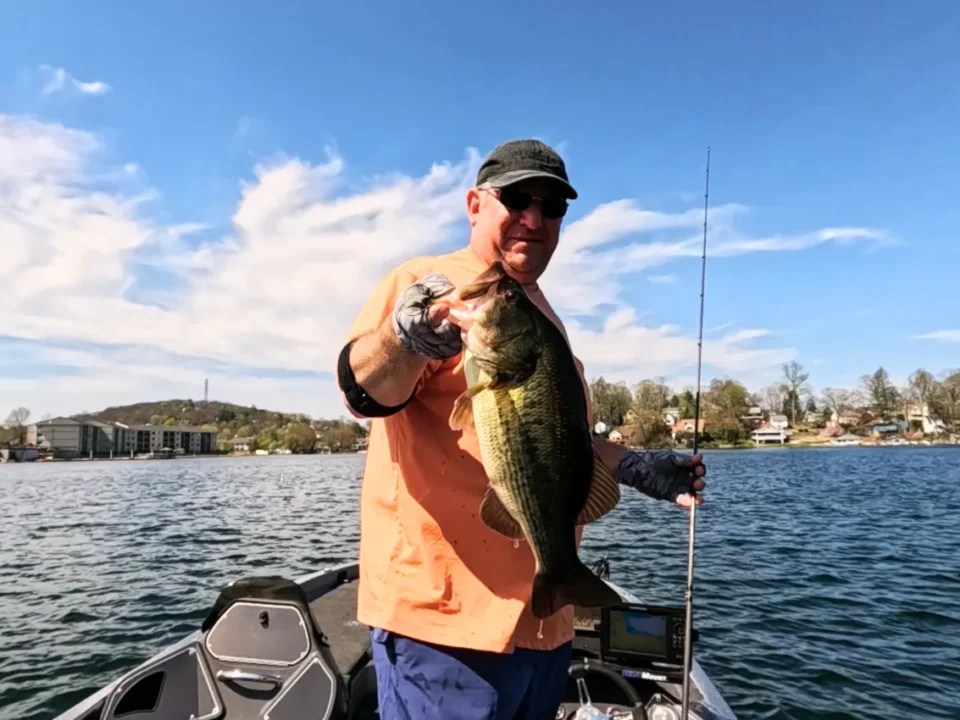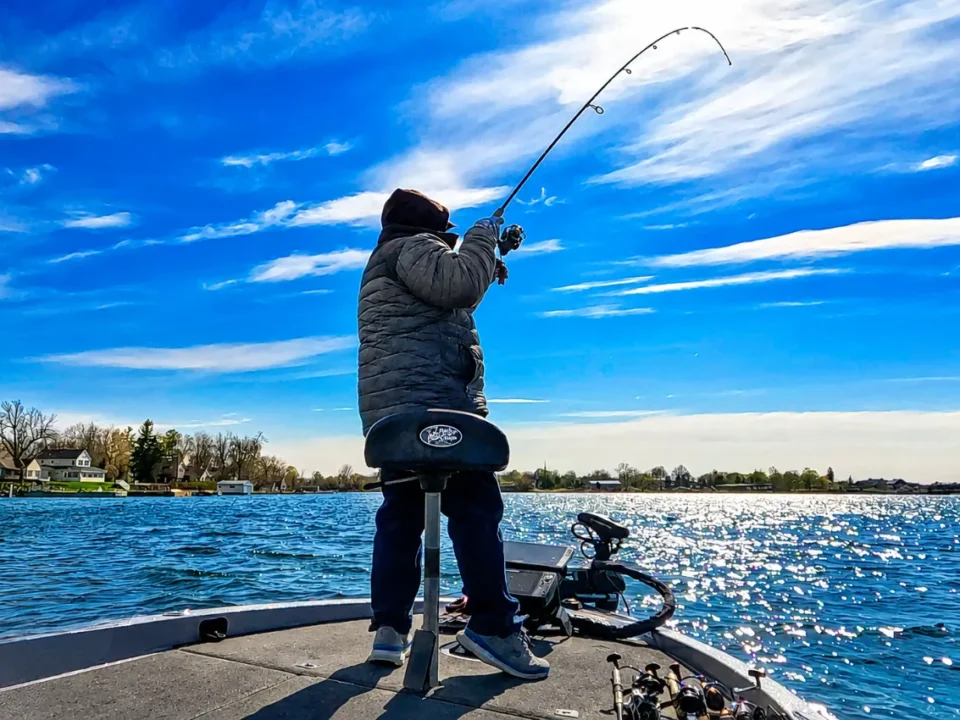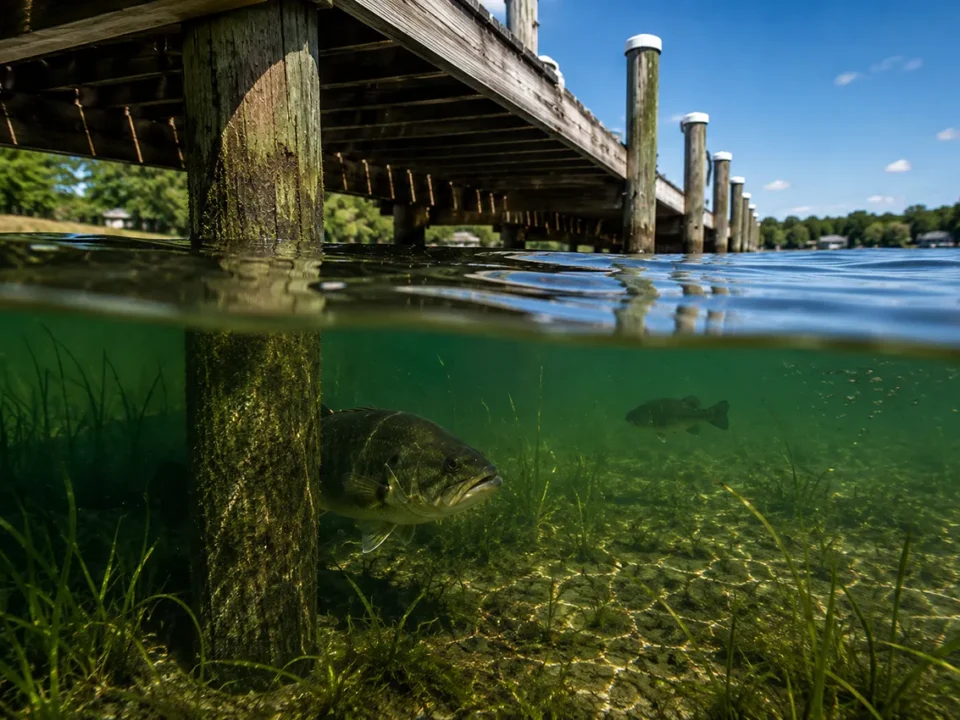
Winter bass fishing on southern and southwestern lakes is less about surviving the cold and more about understanding how bass reposition when water temperatures stabilize. On lakes that remain ice-free, bass don’t disappear—they tighten up, slow down, and settle into predictable winter locations around cover, structure, and bait. These fish may not roam far, but they also aren’t always locked to the bottom, which is why forward-facing sonar has become such a powerful tool during the winter months.
When used correctly, forward-facing sonar allows anglers to confirm where bass are holding, how they’re positioned in the water column, and whether a group of fish is worth spending time on before making repeated casts. Instead of fishing seasonal assumptions, winter forward-facing sonar turns each decision into an informed one—helping anglers stay efficient, focused, and around fish that actually have a chance to bite.
Where Winter Bass Live on Southern & Southwestern Lakes
Across southern and southwestern reservoirs, winter bass tend to concentrate in a few predictable environments. While conditions vary from lake to lake, most productive winter patterns revolve around bass positioning where they can remain comfortable, limit unnecessary movement, and stay close to food. These locations often share one thing in common: they allow bass to adjust vertically without traveling far horizontally.
Rather than spreading out, winter bass typically group tighter and relate to areas that provide both security and feeding opportunity. On many impoundments, this means bass are found around vertical cover such as standing timber, along defined structural edges like channel swings and drops, or suspended in open water following baitfish. These locations may overlap, and bass can shift between them depending on weather, light, and bait movement, but they form the core of most winter patterns in the South and Southwest.
Forward-facing sonar helps make sense of these environments by showing not only where bass are located, but how they are positioned within them. Instead of assuming fish are on the bottom or buried in cover, anglers can see whether bass are suspended, loosely grouped, or actively tracking bait—allowing them to adjust their approach based on real-time information rather than guesswork.
How Bass Position in Winter (What Forward-Facing Sonar Reveals)
Winter bass positioning on southern and southwestern lakes is best understood by looking at where bass choose to spend time and how they use those areas, rather than trying to classify fish strictly as suspended or bottom-oriented. In cold water, bass often remain vertically mobile within a defined zone, adjusting their position based on light, bait movement, and comfort rather than making long horizontal moves.
Forward-facing sonar reveals that winter bass commonly hold at very specific depth ranges for extended periods. Whether they are positioned around standing timber, along a channel edge, or in open water with baitfish, these fish tend to remain within a narrow vertical window and make small adjustments rather than relocating entirely. This predictable behavior is one of the reasons winter can be such an efficient season when using forward-facing sonar.
Grouping behavior is also more pronounced in winter. Bass frequently gather in tighter groups, often separated by size, with larger fish positioned slightly apart from the main cluster. These fish may hold higher in the water column, offset to the side of cover, or just outside the primary group. Forward-facing sonar allows anglers to see these subtle separations and make decisions about which fish are worth targeting instead of casting blindly into a group.
Rather than showing chaos, winter forward-facing sonar typically presents a calmer, more readable picture. Fish movement is slower, reactions are more deliberate, and positioning is more consistent. For anglers willing to interpret what they see on the screen, this makes winter one of the best seasons to understand bass behavior and fish more intentionally.
How Forward-Facing Sonar Helps You Dial In Your Winter Bass Fishing Techniques
Forward-facing sonar doesn’t change what bass do in winter — it changes how clearly anglers can see and respond to what’s already happening below the surface. In cold water, bass metabolism slows, movement decreases, and feeding windows tighten. Fish chase less, reposition less frequently, and conserve energy whenever possible.
Winter bass often hold in very specific locations and depth bands for extended periods. Traditional tools like side imaging and 2D sonar can absolutely help you find them, but they come with limitations in winter: side imaging is great for locating fish and cover on a pass, and 2D sonar can show fish and bait directly under the boat. What those tools don’t do well is let you consistently scan forward, follow roaming bait, and watch fish react to your lure in real time at casting distance.
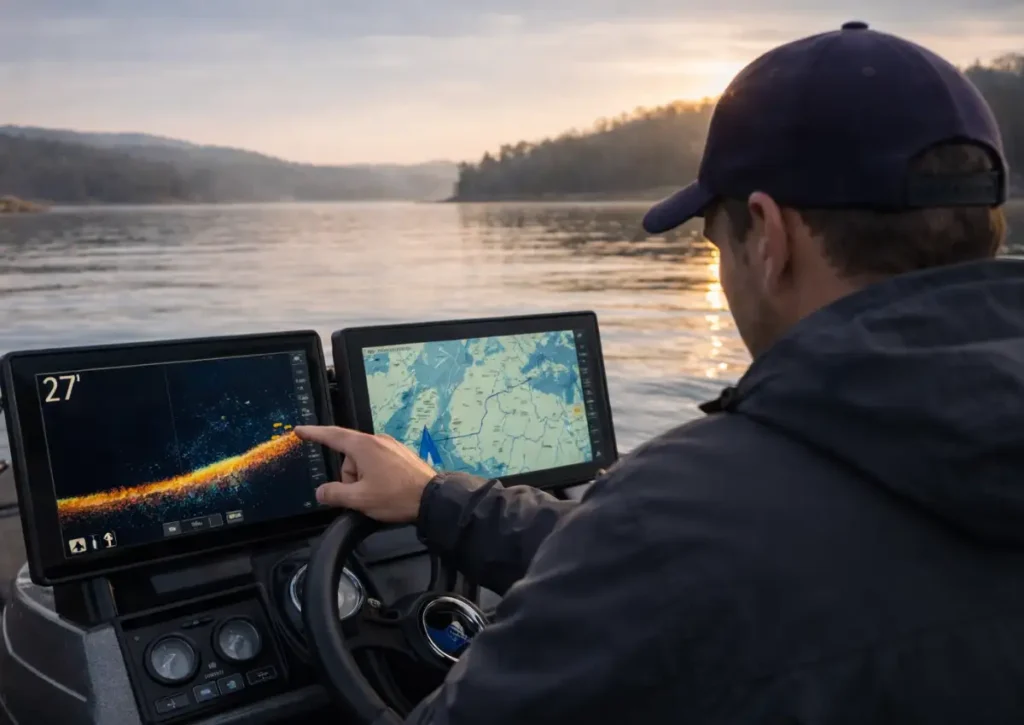
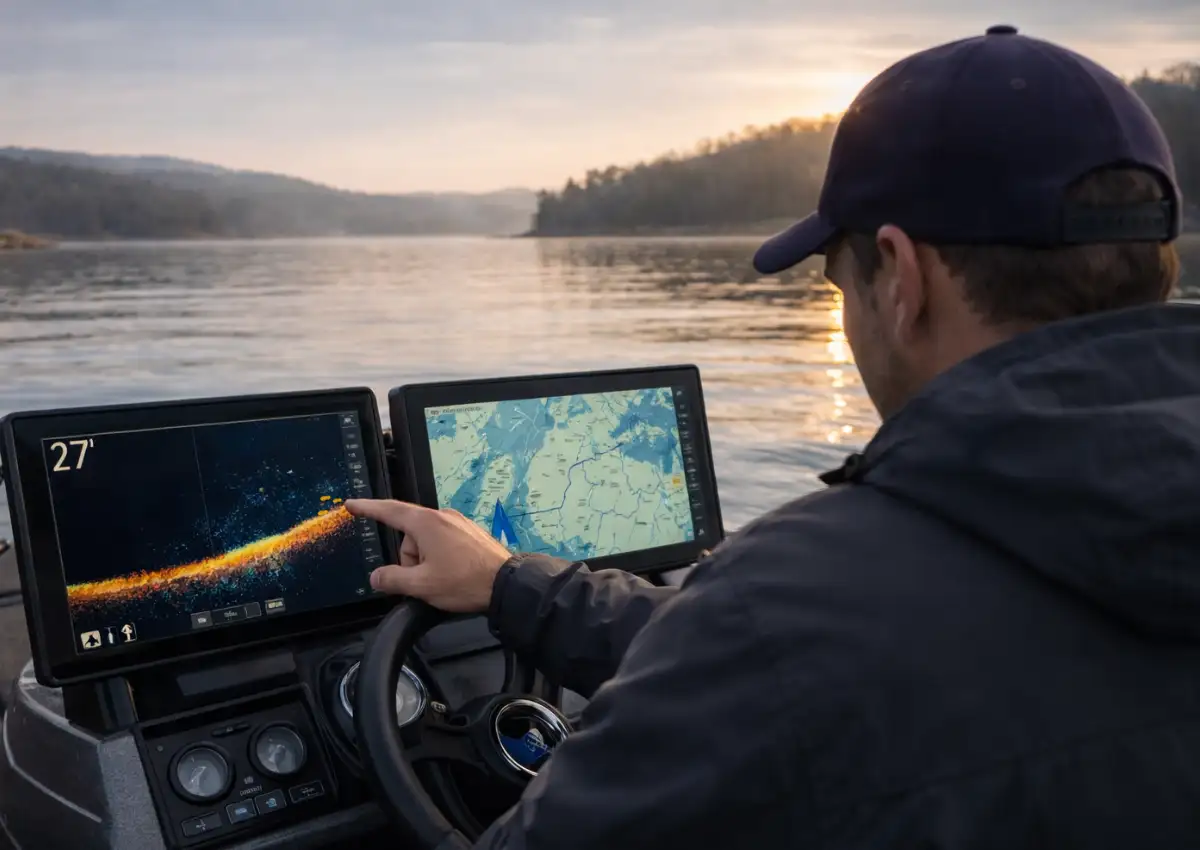
That’s where forward-facing sonar separates itself. It allows anglers to see fish position and movement ahead of the boat and immediately evaluate whether a fish is active, indifferent, or simply using the area without feeding. Instead of guessing for 20 minutes on a spot that “should” have fish, anglers can confirm presence, see how fish behave, and make better decisions about whether to adjust or move.
Forward-facing sonar also makes winter lure refinement far more efficient. Small adjustments in lure size, action, and presentation can be evaluated immediately. Anglers can see whether bass respond better to a bait worked slowly through standing timber, held slightly above their position, dragged along the bottom, or presented directly in their face. Instead of fishing blind, anglers can dial in what triggers interest and abandon presentations that clearly don’t.
Winter bass also tend to respond more deliberately. They rarely “test” a bait repeatedly. When a bass shows interest, the reaction is often subtle — a slow rise, a slight turn, or a short follow. When no reaction occurs, it often means the presentation doesn’t match the fish’s willingness to feed at that moment. Forward-facing sonar makes these distinctions obvious and helps anglers decide whether to adjust, wait, or move on.
By improving coverage and giving real-time behavioral feedback, forward-facing sonar helps anglers spend more time fishing effectively and less time guessing. In winter, that efficiency often makes the difference between locating bass and actually converting them into bites.
Forward-Facing Sonar Settings That Matter Most in Winter
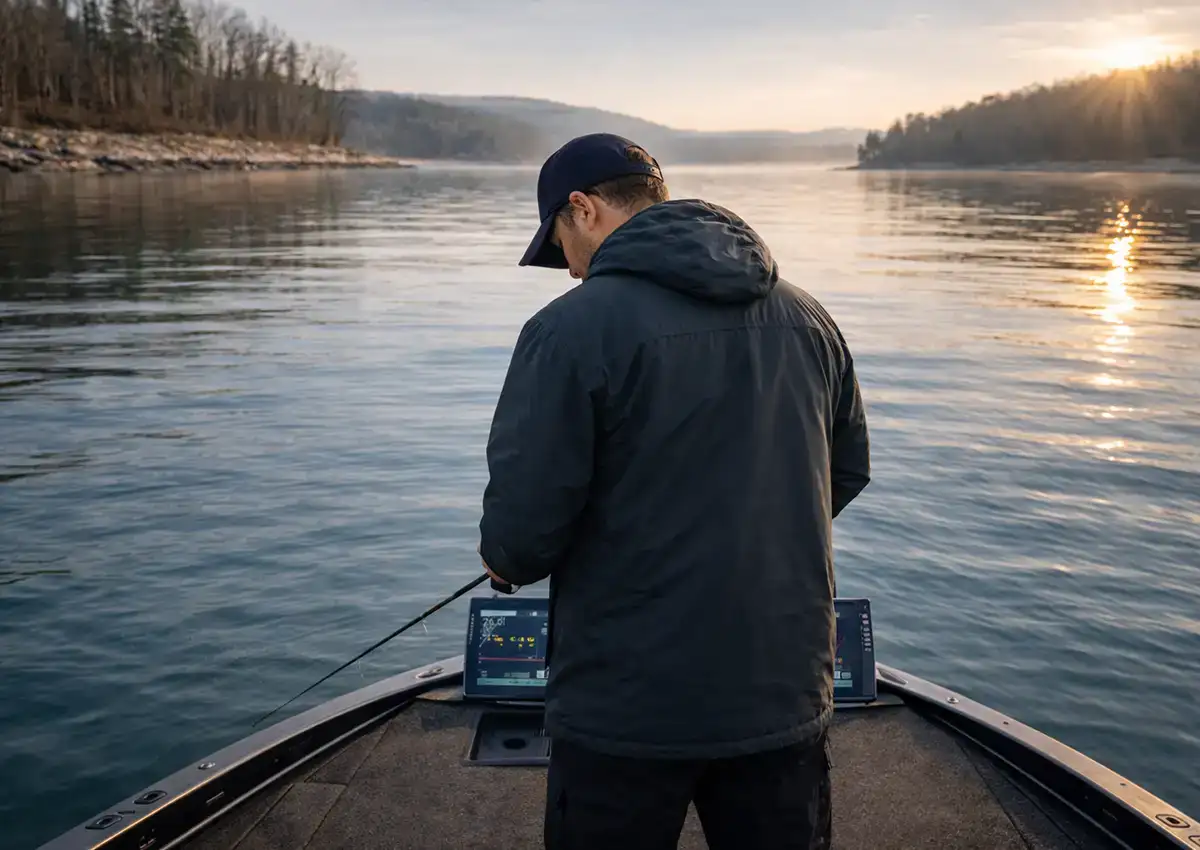
One of the most common winter mistakes is running the same forward-facing sonar settings used during summer. While those settings may still show fish, they often hide the details that matter most in cold water.
Gain is the first adjustment to consider.
In winter, many anglers reduce gain by roughly 5–15% from summer levels, depending on the unit and water clarity. Excessive gain in clear, cold water creates clutter and makes inactive fish blend into bait or background noise.
Depending on your unit (LiveScope, ActiveTarget, MEGA Live), the numeric scale may vary — focus on clean target separation, not a specific number.
Color palette and contrast should emphasize definition over brightness.
Muted palettes that separate fish from bait and bottom tend to work better than high-contrast summer palettes, especially in clear southern and desert reservoirs.
Noise rejection and filtering often need to be reduced in winter.
With less surface disturbance and plankton in cold water, aggressive noise filtering can actually remove subtle fish returns. Many anglers find better clarity by backing filtering down slightly.
Water clarity matters:
Clear water: lower gain, reduced noise rejection
Stained water: slightly higher gain, but still lower than summer settings
When to Stay vs When to Move in Winter
Forward-facing sonar removes much of the guesswork, but winter still demands discipline.
Stay when:
Fish are grouped tightly at a consistent depth
You observe repeated, subtle reactions
Bait is present in the same zone
Move when:
Fish show zero reaction over time
No bait appears on screen
Depth or structure doesn’t align with seasonal patterns
Winter is not about constant running — but it’s also not about camping on unresponsive fish.
Common Winter Forward-Facing Sonar Mistakes
Using summer settings masks subtle winter behavior
Chasing every mark leads to wasted time on inactive fish
Overworking baits reduces reaction in cold water
Ignoring bait presence often results in fishing empty water
Staying too shallow too long overlooks mid-depth winter positioning
Winter fishing rewards restraint, clarity, and patience — not speed.
Why Winter Is One of the Best Times to Learn Forward-Facing Sonar
Winter forces anglers to slow down and pay attention. Fish movement is deliberate, reactions are easier to interpret, and mistakes are more obvious.
Anglers who learn to read forward-facing sonar in winter often find it far more effective year-round, because they understand why fish behave the way they do — not just where they are.
Key Winter Locations Where Forward-Facing Sonar Excels
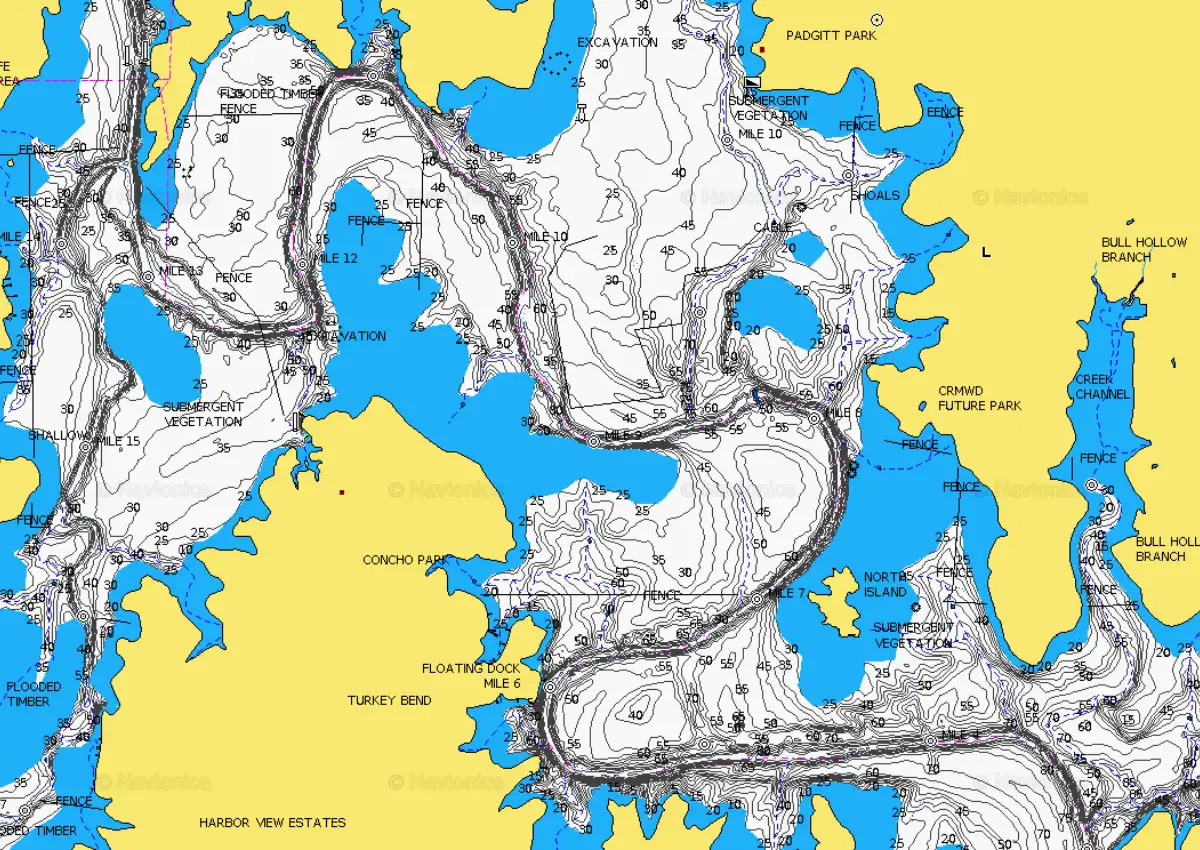
Understanding how to read forward-facing sonar in winter becomes far more effective when paired with an understanding of where bass commonly position themselves on southern and southwestern lakes. While every fishery is different, winter bass typically concentrate in a small number of location types that allow them to remain comfortable, conserve energy, and stay close to food.
Forward-facing sonar helps anglers break these areas down efficiently, revealing how bass are positioned within each environment rather than forcing assumptions based on season alone.
Standing Timber and Vertical Cover
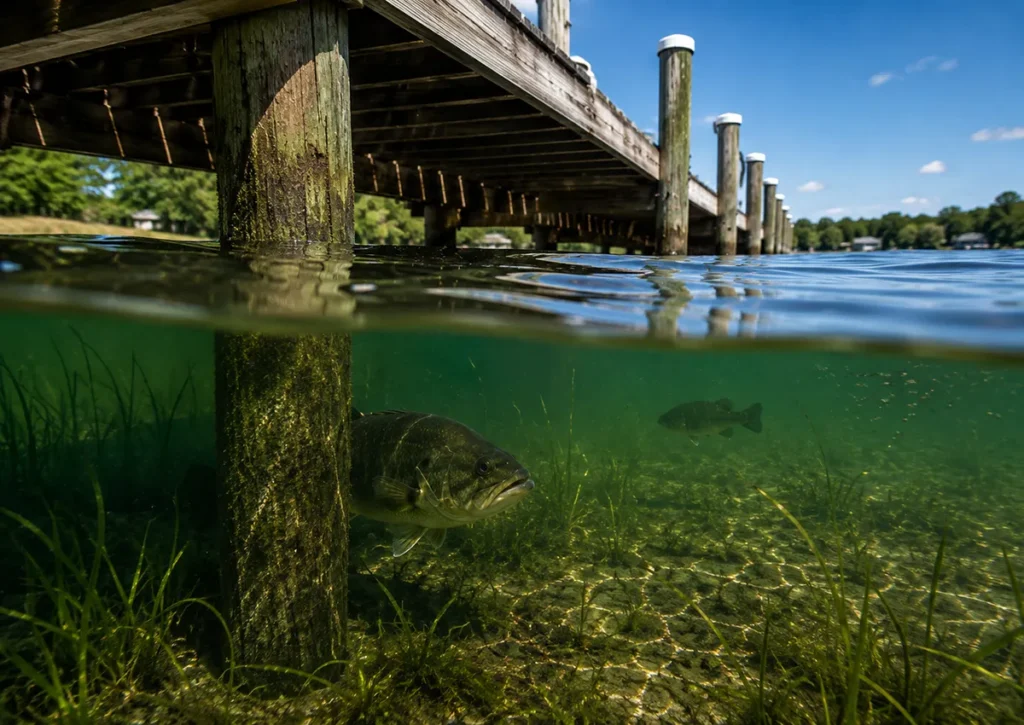
Standing timber is one of the most consistent winter holding areas on many southern and southwestern reservoirs. Timber provides bass with vertical cover that allows them to suspend at specific depths while remaining close to structure. In winter, bass often hold near timber that intersects creek channels, channel swings, or major depth changes.
Rather than sitting at the base of trees, winter bass commonly suspend several feet off the trunk or along the outer edge of a timber line. These fish often remain at a very specific depth band for extended periods, making them ideal targets for forward-facing sonar. Larger bass frequently position slightly apart from smaller groups, using the same timber but holding higher in the water column or offset from the main concentration.
Forward-facing sonar allows anglers to see these positioning details clearly, making it possible to target individual fish instead of blindly fishing through trees.
Channel Swings, Breaks, and Hard Edges
Channel swings and steep breaks are classic winter locations because they funnel bass into predictable areas. These features allow fish to remain close to deep water while adjusting their position vertically as conditions change. On many impoundments, bass hold along the edge of the channel rather than directly in the deepest water.
In winter, bass may group tightly along small sections of a swing or break, especially where it intersects with timber, brush, or hard bottom. Forward-facing sonar helps pinpoint exactly where fish are holding along these edges and whether they are positioned on the bottom, slightly off the break, or suspended nearby.
Because winter bass move less horizontally, these areas often remain productive throughout the day. Forward-facing sonar allows anglers to monitor changes in positioning and decide when to stay or return later rather than abandoning productive water.
Open Water and Baitfish-Driven Movement
On many southern and southwestern lakes, winter bass are not always tied to visible cover or structure. Instead, they may suspend in open water while following schools of baitfish. These bass often move slowly but consistently and may position well off the bottom with no obvious reference point.
Forward-facing sonar makes this pattern possible to fish by revealing both bait and the bass following it. These fish often appear above or along the edges of bait schools and may remain suspended for long periods. While this pattern can produce fewer bites, it frequently results in higher-quality fish.
Without forward-facing sonar, open-water winter bass are easy to overlook. With it, anglers can stay with moving fish and make informed decisions about when to commit time to a group.
Putting It All Together
Winter bass fishing on southern and southwestern lakes rewards anglers who focus on efficiency and understanding rather than speed or volume. Bass position themselves deliberately around cover, structure, and bait, and their willingness to react is often tied closely to presentation details and timing rather than location alone.
Forward-facing sonar doesn’t replace fundamentals—it sharpens them. By allowing anglers to confirm fish presence, observe behavior, and fine-tune presentations in real time, it helps eliminate guesswork and wasted effort. When used thoughtfully, forward-facing sonar turns winter into a season of informed decisions, where each adjustment is made with purpose and each cast is aimed at fish that actually have a chance to bite.