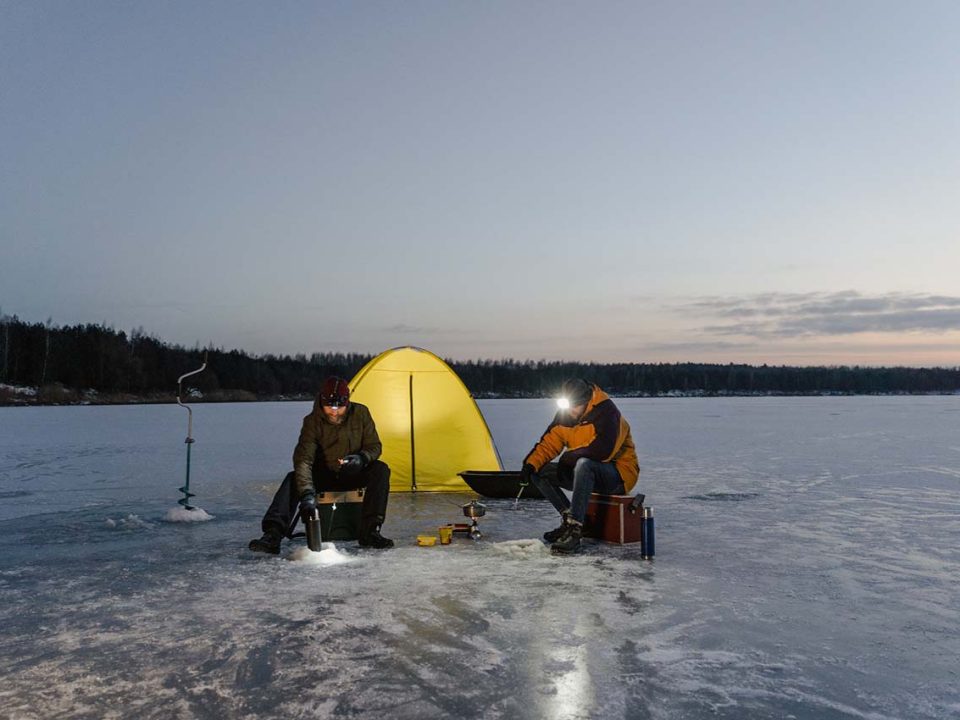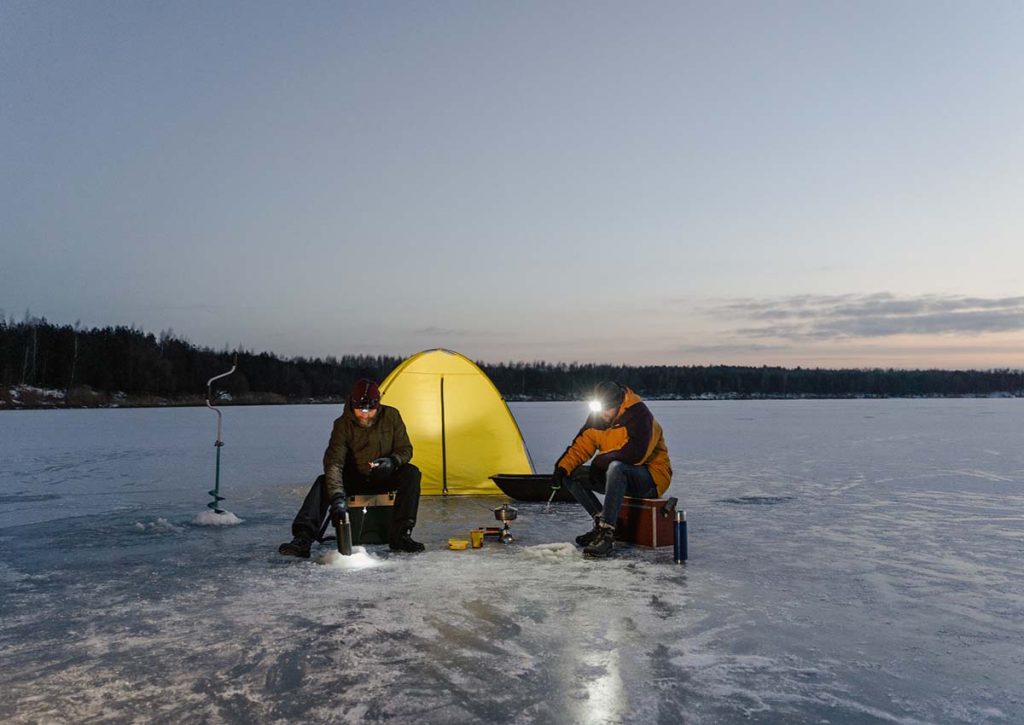
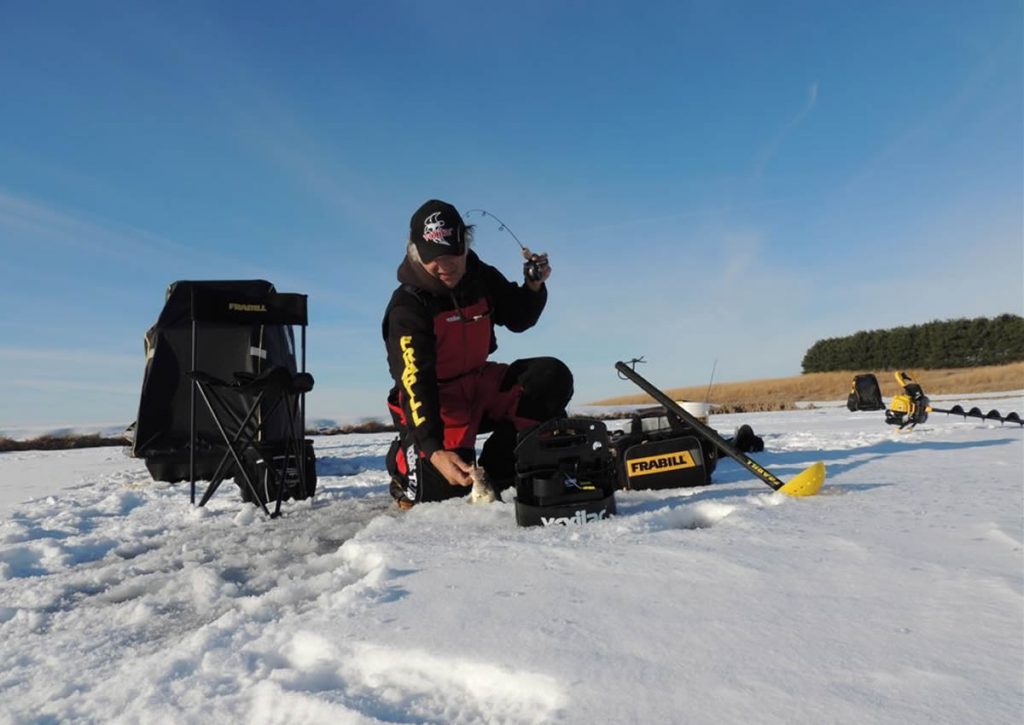
Line watching has been a great way of detecting strikes in many types of fishing. It can be tricky at times, and especially when ice fishing with different light conditions.
Straight-line fishing has a couple of detection times. The early one is when the line is seen to do something different, such as stop as it is going down, moving to the side, or a slight twitch downward and/or upward.
The second is when the rod tip is jerked. It is best to see that early strike, as it is the most productive since there are many times that it is the only strike detected.
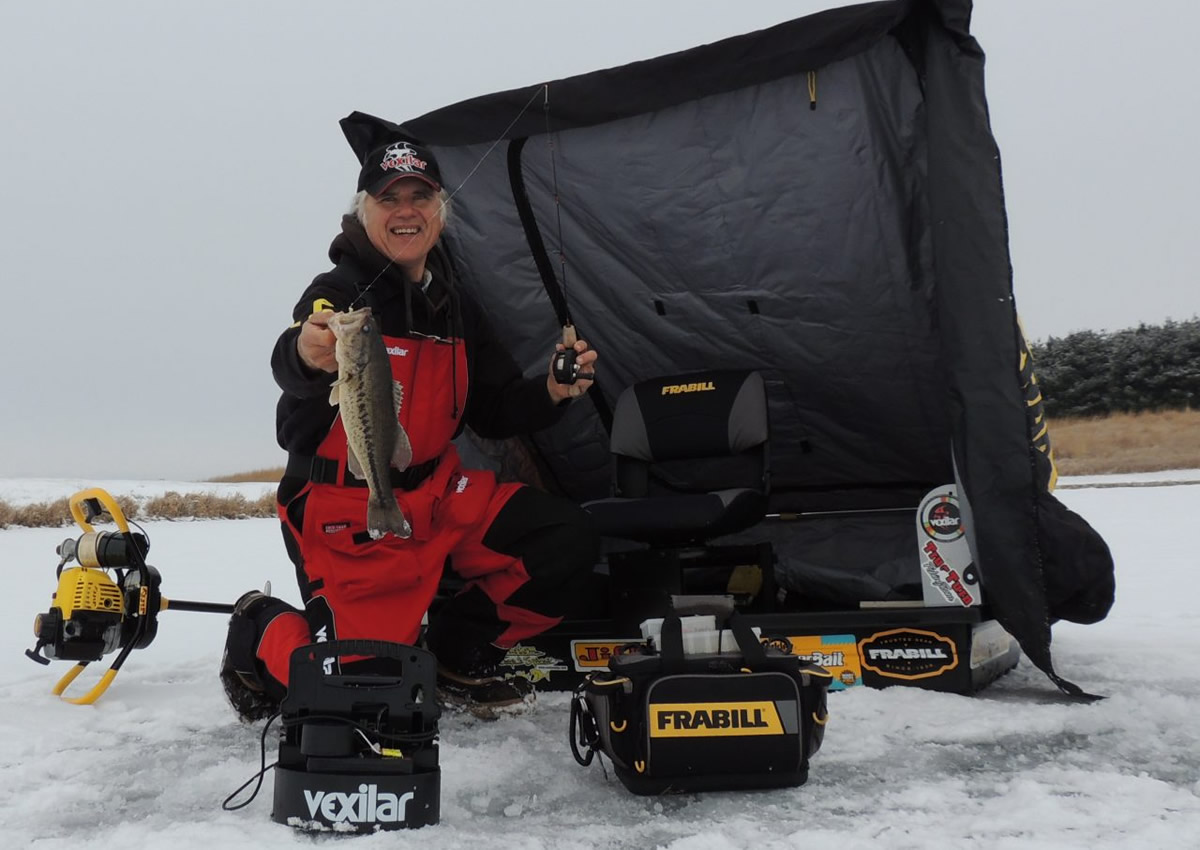
Fishing in the open usually is the best to see the line, but when in a shelter, or in situations when line color blends with a snowy background, early strike detection can be a problem. It is these times when certain things must be tried to change the background or lighting conditions. Another possibility is the line color changes. There are several available – clear, yellow/gold, blue, solar green, and fluorescent, to name a few. At times I will have rods rigged with different colors of lines, normally clear, blue, and green, but if there is any way to manage it, I will stick with the clear.
If changing line color doesn’t work then the next step is to alter light conditions. In the open, the light is a bit difficult to change, but in the shelter, there are a couple of possibilities. First are the windows. Depending on how many are available, try opening all completely, or partially. Then close one or two.
Change how they are opened until the right lighting is found. If this doesn’t work, close the windows, and try something like Frabill’s Shelter Lights, and angle them in different directions.
Next is changing “the background”. In other words, change what is behind the line. Snow and ice can be a helper. Try building up the sides around the hole, and see how the line contrasts against it. There are times when dirtier snow, especially if stained by murky water from the drilled hole, will help as a background.
Another way to make a better background is to use other items. One, which is normally with an angler, is the flasher. I position my Vexilar so that the black base, black/red cover bag, transducer cable, and float, or transducer itself (if watching the line in clear water, inside the hole), will contrast with the line. A small piece of wood, a coil of rope, and even a spare bucket, set on the backside of the hole, can be tried.
To further help in straight-line fishing, a spring bobber can be used. While this does not help with the early “line movement” strike detection, it does provide an in-between time when something can be seen before the rod tip is jerked. There are several spring bobbers, with my choice being Frabill’s coil-spring (available in a kit with line threading device), or their super sensitive/adjustable Titanium spring.
If staying strictly with “line only” then a good recommendation would be to use one of Frabill’s Straight Line combos, which is the closest thing to having direct contact with the line. There are many advantages to this style of ice fishing – the aforementioned early strike detection, easier for deeper water situations and when fish are changing holding depths, less adjustments, fewer freeze-up problems, and keeping a person in shape for the open water season, especially those who are plastic worm or jig fishermen.
Remember, the key to successful straight-line fishing, is being able to have the maximum visibility of the line, and the most sensitivity possible. Give some of these tips a try, and hopefully, you will have a more productive ice season.
If there are any questions about this or another fishing subject, contact me through the Dan’s Fish ‘N’ Tales® website at www.dansfishntales.com
Until next time, get out on the water, and enjoy a great day of fishing.