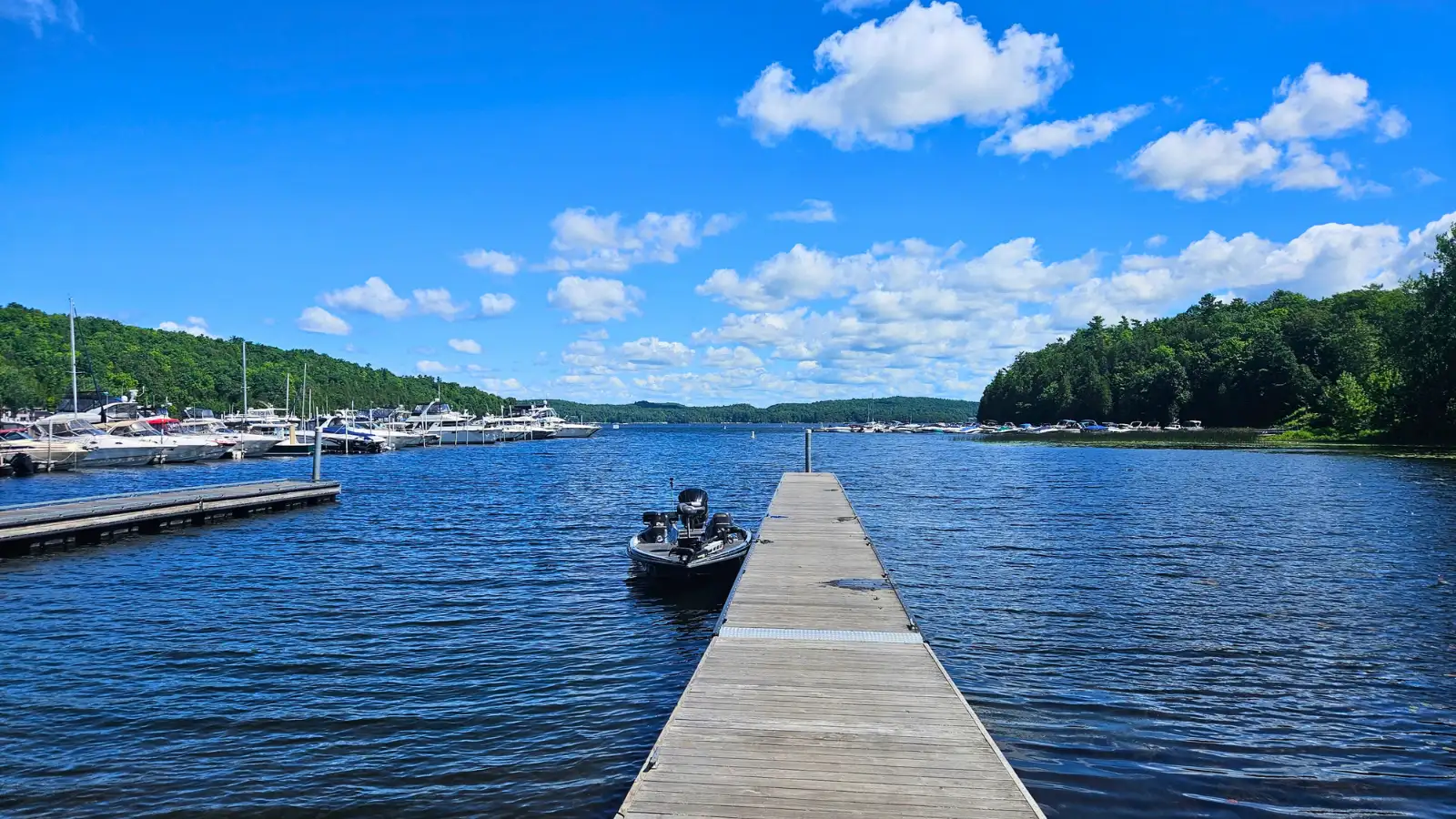
Lake Champlain Bass Fishing Destination
Lake Champlain ranks among the Northeast’s premier bass fisheries, offering expansive water, diverse structure, strong forage and consistent tournament-level smallmouth and largemouth bass opportunities year-round. Straddling New York and Vermont, its size, geography and seasonal patterns distinguish it from average lakes.
Why Lake Champlain Is a Bucket List Bass Fishery
Lake Champlain is one of the few northern fisheries where an angler can legitimately choose between targeting trophy smallmouth or committing to a largemouth program — and both decisions can win.
This is not a smallmouth-only destination. It is a dual-threat fishery built on geographic scale, habitat diversity, and seasonal flexibility. From the grass-heavy southern end to the rock-dominated northern basin and Inland Sea, Champlain fishes differently depending on where you launch — and that variability separates it from average northern lakes.
Lake Champlain forces anglers to think beyond a single pattern. Water color shifts, basin depth changes, vegetation density, and wind exposure all influence daily execution. You’re not just fishing spots — you’re managing sections of a massive, interconnected system. That scale spreads fish out, absorbs pressure, and creates real contingency plans when conditions change. Whether you’re working grass edges for largemouth or graphing rock transitions for smallmouth, Champlain rewards preparation, adaptability, and disciplined decision-making.
Fish Species in Lake Champlain
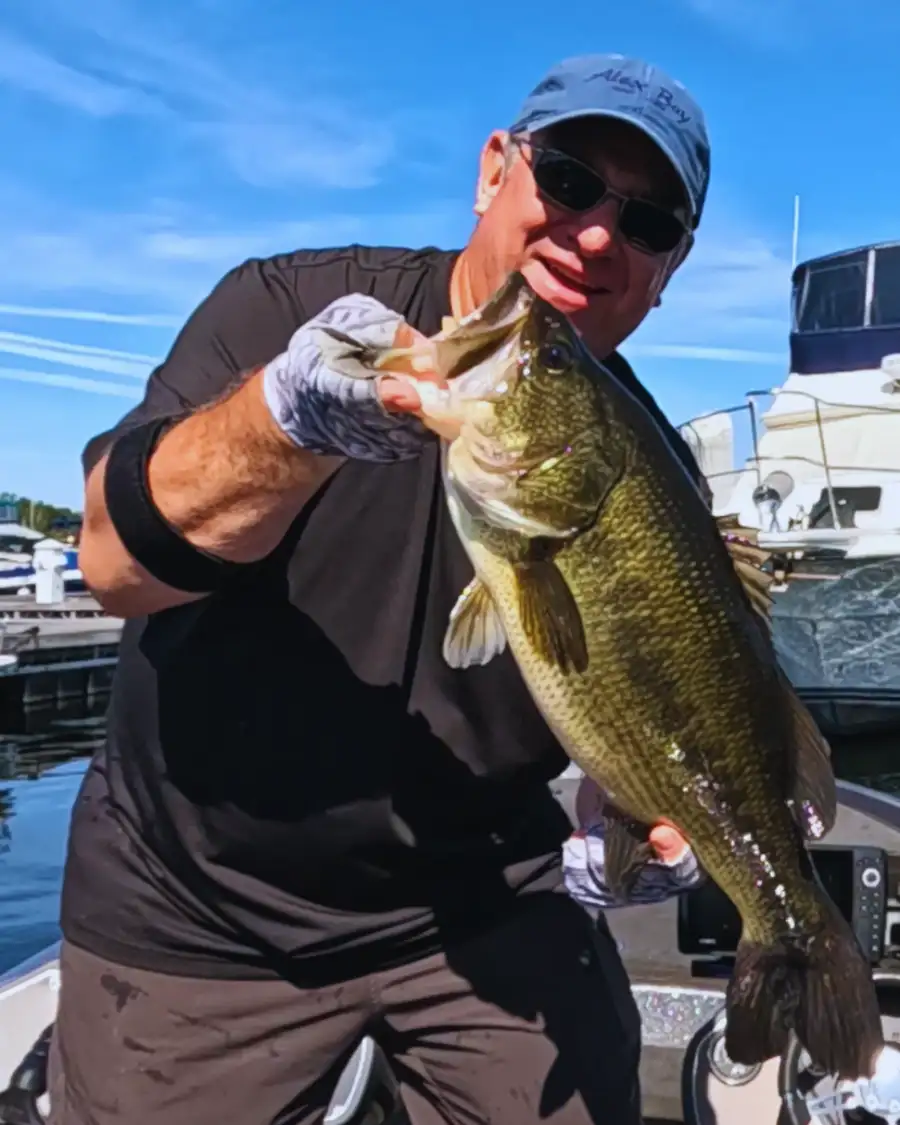
Lake Champlain supports a diverse freshwater fishery, with both largemouth and smallmouth bass playing a major role for recreational and tournament anglers. Smallmouth bass are especially prominent throughout the northern basin, Inland Sea and other rock-dominated areas, while largemouth bass thrive in the grass-heavy southern sections, protected bays, marinas and backwaters.
Other popular species found in Lake Champlain include northern pike, walleye, lake trout, landlocked Atlantic salmon, yellow perch and a variety of panfish and other freshwater species.
For bass anglers, Lake Champlain stands out because both largemouth and smallmouth can support a complete fishing strategy, often within the same trip.
Tournament Pedigree
Lake Champlain consistently produces competitive, multi-day tournament weights across both species. Anglers regularly bring strong five-fish limits to the scales, and it is not uncommon to see events won on entirely different programs — one competitor leaning on southern vegetation largemouth while another commits to northern smallmouth structure.
- Consistent Quality: Four-pound-class smallmouth are realistic targets, not outliers.
- Legitimate Largemouth Program: Five-pound-class largemouth are realistic in productive grass-rich sections of the lake.
- Depth of Field: Multiple viable patterns hold up across a full tournament field.
- Seasonal Stability: The lake produces from spring staging through fall transition.
Its size prevents the fishery from collapsing under pressure, allowing strong weights to hold through multi-day events.
Dual-Species Strategy
Few northern lakes allow anglers to pivot their entire species focus based on wind direction, seasonal timing, or fishing pressure.
On calm days in the northern basin, offshore rock humps, gravel transitions, sand flats, and current-influenced structure create textbook smallmouth setups. When wind builds on the main lake, the southern grass fisheries and protected bays provide a completely different program — flipping milfoil, frogging shallow mats, working docks, reeds, and marina water for largemouth.
You are not locked into one identity on Lake Champlain. Strategic flexibility is built into the system.
Habitat Diversity at Scale
Lake Champlain stretches more than 100 miles and functions as multiple connected fisheries rather than a single uniform body of water.
- Southern Basin: Extensive vegetation, river inflows, backwater sections, and marina systems.
- Mid-Lake Transitions: Mixed rock and grass structure with depth variation.
- Northern Basin: Rock-dominant structure, sand transitions, and offshore humps.
- Inland Sea: Protected water with distinct current and structural characteristics.
Each section responds differently to wind, temperature shifts, and seasonal movement, expanding opportunity rather than limiting it.
Largemouth Power Zones
Champlain’s largemouth fishery is often underestimated. The southern end produces thick, vegetation-fed fish that relate strongly to grass lines, docks, reeds, and shallow protected water.
Post-spawn through summer, these fish hold on outside weed edges and shaded structure during stable weather periods. Marinas and river-fed sections become high-percentage targets in warm-water months.
This is not a secondary fishery — it is a legitimate primary program capable of producing tournament-caliber limits.
Geographic Advantage & Wind Management
Wind is a defining factor on Lake Champlain. Because of its length and orientation, certain basins can become unfishable while others remain manageable.
Anglers who understand basin positioning can relocate without trailering and continue executing productive patterns. If offshore smallmouth structure is blown out, you can shift south into protected vegetation. If grass areas are pressured, northern rock transitions offer relief.
That adaptability — combined with species diversity and structural range — elevates Lake Champlain from a strong northern fishery to a true bucket list bass destination.
Best Times to Fish Lake Champlain
Lake Champlain offers legitimate opportunities from ice-out through late fall, but the lake does not fish the same across seasons — or across basins. Water temperature, wind direction, vegetation growth, and spawning cycles influence which sections of the lake become dominant at any given time.
Understanding seasonal positioning is critical. Champlain rewards anglers who adjust location, depth, and species focus as conditions evolve.
Early Season / Ice-Out
As water temperatures climb out of the upper 30s and low 40s, smallmouth begin staging along transitional rock areas near spawning flats, especially in the northern basin and Inland Sea. Gravel points, sand-to-rock transitions, and protected coves warm first and attract early prespawn fish.
Largemouth in the southern basin position along emerging vegetation edges, shallow wood, and protected backwater areas. River inflows and darker-bottomed bays warm more quickly and can produce the first consistent bites of the season.
- Primary Focus: Rock transitions for smallmouth, warming bays for largemouth.
- Wind Factor: Cold fronts and north winds can reset fish positioning quickly.
- Pressure Level: Moderate early, increasing as water approaches spawning range.
- Travel Consideration: Expect variable weather and limited seasonal services early in the year.
This period rewards slow presentations and disciplined location selection rather than run-and-gun fishing.
Opening Day Through Post-Spawn
Late spring into early summer is one of the most consistent windows on Lake Champlain. Smallmouth move shallow to spawn on gravel flats, sand pockets, and protected rock structure throughout the northern basin and Inland Sea.
In the southern end, largemouth spawn around grass edges, reed lines, and shallow backwater cover. As the post-spawn transition begins, fish slide to first breaks, outside grass lines, and nearby structure.
- Primary Focus: Spawning flats and adjacent staging areas.
- Wind Factor: Wind can muddy spawning zones, pushing fish to cleaner protected water.
- Pressure Level: High — this is a popular travel window.
- Booking Insight: Lodging and marinas should be secured well in advance.
This is a numbers and quality period for both species, but pressure increases significantly on obvious spawning water.
Summer Offshore Pattern
As water temperatures stabilize and vegetation reaches full growth, Lake Champlain divides clearly into two dominant programs.
Smallmouth shift offshore in the northern basin, relating to humps, rock piles, sand transitions, and current-driven breaks. Electronics become critical for locating bait concentrations and isolated structure.
Largemouth in the southern basin position on outside weed edges, thick milfoil mats, dock shade, and marina water. Protected grass systems remain productive even when the main lake becomes difficult due to wind.
- Primary Focus: Offshore rock for smallmouth, outer grass lines for largemouth.
- Wind Factor: Strong south or north winds can make main-lake runs dangerous.
- Pressure Level: Spread out due to lake size, but popular community holes see traffic.
- Travel Consideration: Afternoon storms and sustained wind are common.
This is when Champlain’s scale becomes an advantage. If one basin becomes unfishable, another often remains viable.
Fall Transition
Cooling water triggers bait movement and repositioning for both species. Smallmouth move shallower from deep humps to transitional rock near flats and current seams. Largemouth follow bait along outside grass lines and remaining vegetation edges before turnover.
Wind direction becomes even more influential during this period. Certain shorelines load with bait under consistent wind exposure, while others become inactive.
- Primary Focus: Transitional rock and remaining healthy vegetation.
- Wind Factor: Wind-blown banks can concentrate bait and active fish.
- Pressure Level: Moderate, decreasing after peak summer tourism.
- Weather Reality: Rapid temperature swings are common.
Fall offers aggressive feeding windows and quality fish, but mobility and wind management are critical.
Winter Ice Fishing (Seasonal Bonus)
In years when Lake Champlain develops safe ice in protected bays, winter anglers target both smallmouth and largemouth through the ice. Malletts Bay, Inland Sea sections, and sheltered southern coves are common areas when conditions allow.
- Primary Focus: Deep basin edges, transitional rock, and remaining vegetation lines.
- Safety Factor: Ice thickness varies significantly across basins — conditions must be verified locally.
- Travel Consideration: Access points and services are limited during winter months.
Ice conditions on Champlain are highly variable and should never be assumed safe without local confirmation.
For anglers new to hardwater fishing, preparation matters. Before planning a winter trip, review our in-depth resources:
Stay Safe on the Ice: A Beginner’s Guide to Ice Fishing Safety
Ice Fishing for Beginners: Tips, Tricks, and Techniques for a Successful Trip
These guides cover safety fundamentals, essential gear, and seasonal tactics to help anglers approach Champlain’s winter conditions responsibly and effectively.
Always confirm current season dates, size limits, and creel regulations with official New York and Vermont agencies before traveling.
Licensing and Regulations
Lake Champlain spans both New York and Vermont, and anglers need to understand which state's waters they are fishing before launching. The lake has a reciprocal licensing agreement across much of the Main Lake and South Lake, but there are important exceptions where only one state's license is valid.
Lake Champlain Reciprocal Fishing License Agreement
In most of the Main Lake and South Lake portions of Lake Champlain, anglers holding either a valid New York or Vermont fishing license may fish the reciprocal boundary waters.
However, the reciprocal agreement does not apply everywhere on the lake.
- South Bay: A valid New York fishing license is required.
- Inland Sea: A valid Vermont fishing license is required.
- Malletts Bay: A valid Vermont fishing license is required.
- Missisquoi Bay: A valid Vermont fishing license is required.
- The Gut: A valid Vermont fishing license is required.
Because these areas are important parts of the Lake Champlain bass fishery, anglers should confirm which jurisdiction applies to the water they plan to fish before traveling.
New York Fishing License & Regulations
Anglers fishing New York waters of Lake Champlain, including South Bay and other areas outside the reciprocal agreement, must carry a valid New York State fishing license when required.
Current New York fishing licenses and regulations are available through the New York State Department of Environmental Conservation fishing license system.
Vermont Fishing License & Regulations
Anglers fishing Vermont-only waters, including the Inland Sea, Malletts Bay, Missisquoi Bay and The Gut, must carry a valid Vermont fishing license when required.
Current Vermont fishing licenses and regulations are available through the Vermont Fish & Wildlife Department.
Know Which State's Regulations Apply
A reciprocal fishing license does not mean regulations are identical across the lake. Anglers are responsible for following the season dates, size limits, possession limits and other fishing regulations that apply to the jurisdiction where they are fishing.
Always confirm current licensing requirements, reciprocal boundaries, season dates, size limits and possession limits with the appropriate state agency before traveling, as regulations and agreements can change.
Key Launch Areas and Travel Hubs
Access to Lake Champlain is centered around several primary hubs that position anglers differently depending on target species, wind direction, and seasonal timing: Ticonderoga, NY, Plattsburgh, NY, and Colchester, VT.
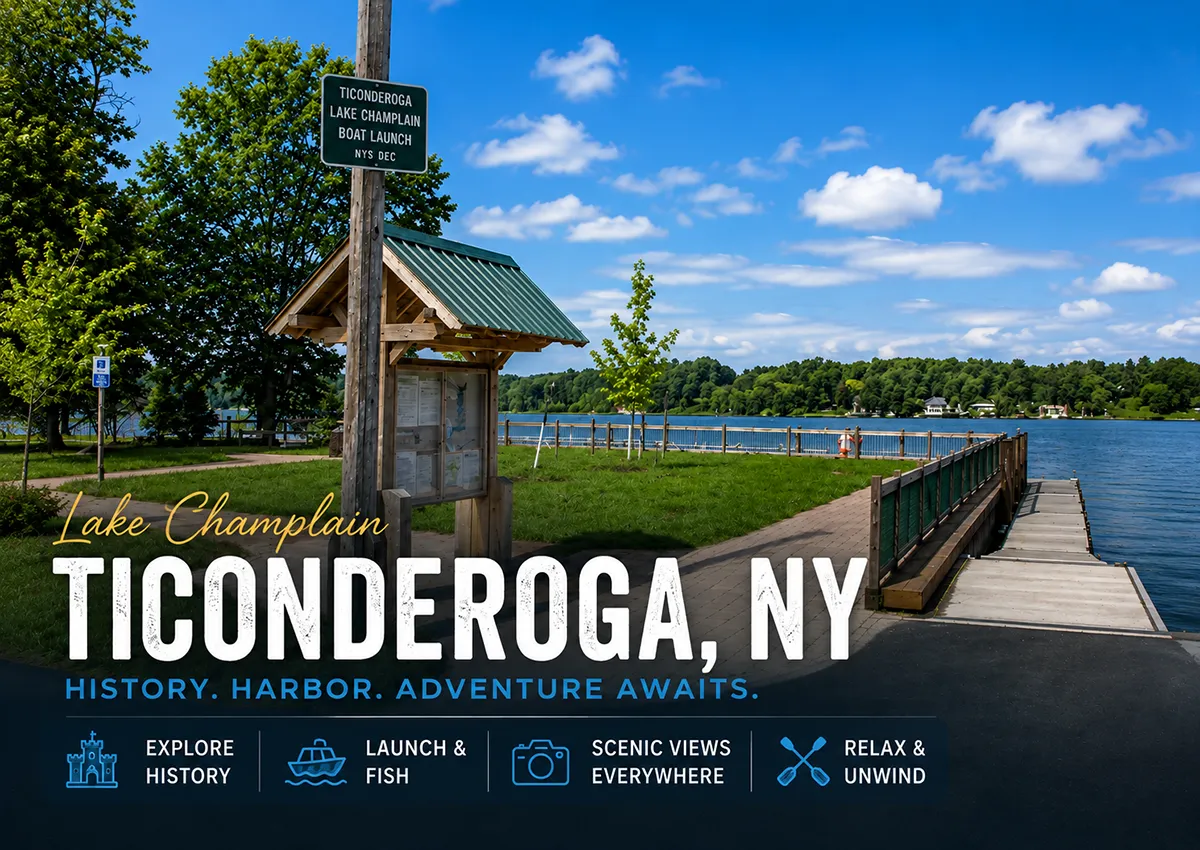
Ticonderoga, NY anchors the southern basin and provides direct access to extensive grass systems, river inflows, and largemouth-dominant water. It is the strategic choice for anglers prioritizing vegetation patterns and protected water during heavy wind.
Plattsburgh, NY serves the northern basin and offers efficient access to offshore rock structure, sand transitions, and current-influenced smallmouth water. It is well positioned for anglers targeting open-water structure and deep humps.
Colchester, VT provides entry to Malletts Bay and the Inland Sea, offering a mix of protected water, transitional structure, and access to broader Vermont shoreline opportunities.
Each launch area accesses a distinct section of the system, and wind direction can significantly affect run distance, safety, and daily execution. Choosing the right hub for your seasonal pattern reduces travel time and expands fishable water.
Ticonderoga, NY — Lodging, Eats, Boating & More
Places to Stay
- Best Western Plus Ticonderoga Inn & Suites — Reliable lodging with ample parking and quick access to southern Champlain launches.
- Circle Court Motel — Simple, angler-friendly motel close to town amenities and launch ramps.
- Stone House Motel — Clean roadside lodging with easy truck-and-trailer access.
- VRBO / Airbnb — Look for waterfront or near-ramp rentals along Lake George outlet and southern basin access points.
Places to Eat & Drink
- The Paper & Pencil — Full-service restaurant suitable for relaxed post-fishing dinners.
- Hot Biscuit Diner — Early breakfast staple for anglers heading to the ramp before sunrise.
- Ledge Hill Brewing Company — Casual food and local beer after a full day on the water.
- House of Pizza Restaurant — Quick, dependable meal option close to lodging.
- Burleigh’s Luncheonette — Local diner offering breakfast and lunch within minutes of launch routes.
Marinas & Boating Access
- Snug Harbor Marina — Southern basin marina offering dockage, fuel, and direct grass-water access.
- Bridgeview Harbour Marina — Full-service marina positioned near productive southern vegetation zones.
Public Boat Launches
- NYS DEC Ticonderoga – Lake Champlain Boat Launch — Hard-surface public ramp on Route 74 with parking for approximately 52 cars and trailers and direct access to southern Lake Champlain.
Official Launch Information: NYS DEC Essex County Boat Launch Sites
Tackle & Supplies
- Walmart – Ticonderoga — Practical stop for fishing basics, line, terminal tackle, and trip supplies.
- Aubuchon Hardware — Local hardware store carrying basic outdoor and fishing essentials.
Things to Do When You're Not Fishing
- Fort Ticonderoga — Historic Revolutionary War site overlooking Lake Champlain.
- LaChute River Walk — Nearly three miles of riverfront trail through Bicentennial Park with historic bridges, dams, waterfalls, and views along the river connecting Lake George and Lake Champlain.
- Adirondack Region — Hiking, scenic drives, and mountain views within short driving distance.
Note: Many businesses operate seasonally. Confirm hours and availability before travel.
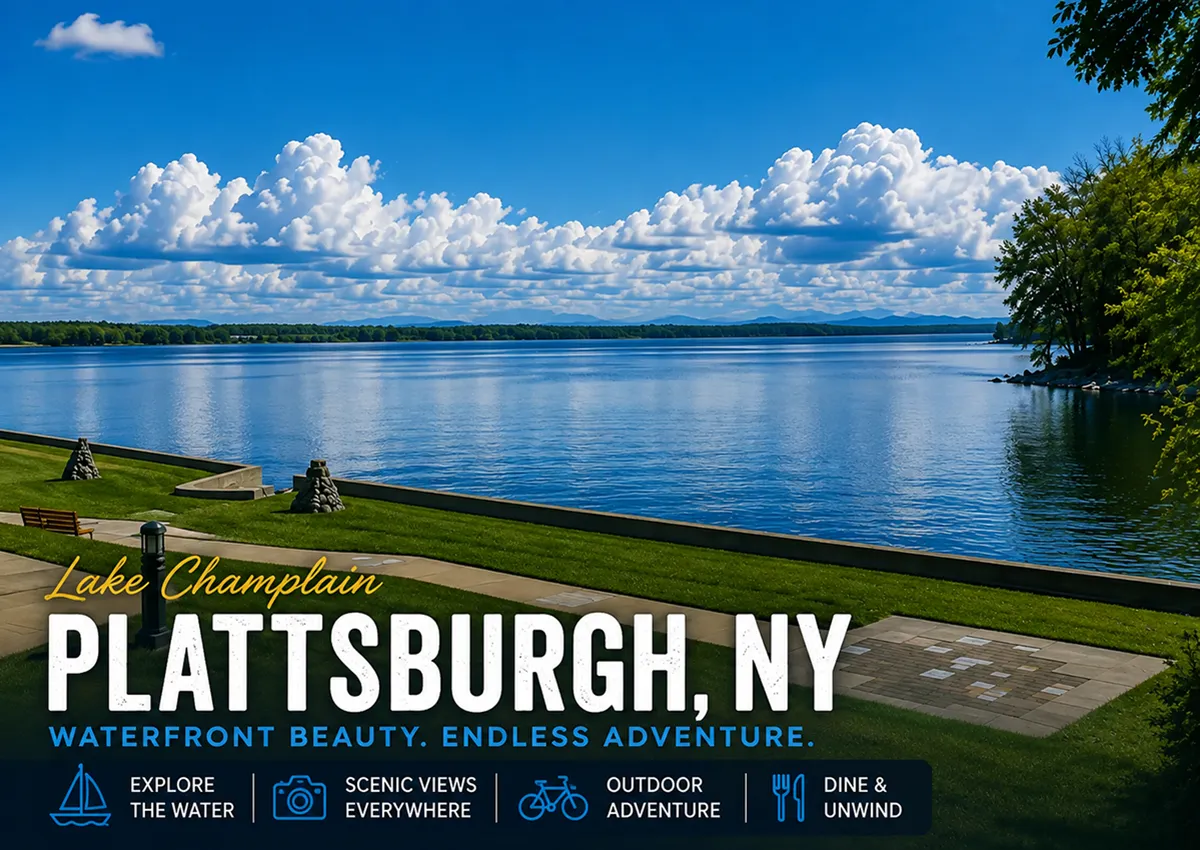
Plattsburgh, NY — Lodging, Eats, Boating & More
Places to Stay
- Hampton Inn & Suites Plattsburgh — Comfortable lodging with breakfast and quick access to northern basin launches.
- Best Western Plus Plattsburgh — Reliable option near restaurants and primary access roads to the lake.
- La Quinta Inn & Suites Plattsburgh — Convenient lodging for anglers making early runs to offshore structure.
- Holiday Inn Express Plattsburgh — Suite-style comfort with easy highway access to marinas and ramps.
- VRBO / Airbnb — Look for shoreline rentals north of the city for reduced morning run time.
Places to Eat & Drink
- Valcour Brewing Company — Full menu and craft beer in a restored historic building near the waterfront.
- Anthony’s Restaurant & Bistro — Sit-down dinner option suitable for multi-day tournament stays.
- Michigans Plus — Local breakfast and diner option before first light.
- Dunkin’ — Quick coffee and breakfast sandwiches for early launch mornings.
Marinas & Boating Access
- Mooney Bay Marina — Full-service marina with fuel, dockage, and access to productive northern water.
- Lighthouse Marina — Dockage and service facilities positioned near offshore smallmouth structure.
- Point Au Roche State Park — State park access to northern shoreline structure and transitional zones.
Public Boat Launches
- Dock Street Landing – Plattsburgh — Concrete public ramp in downtown Plattsburgh with direct access to the northern basin.
- Peru Dock Boat Launch — Hard-surface public launch south of Plattsburgh with parking for trucks and trailers.
- Wilcox Dock — Concrete public ramp north of Plattsburgh with substantial trailer parking.
Official Launch Information: NYS DEC Clinton County Boat Launch Sites
Tackle & Supplies
- DICK'S Sporting Goods – Plattsburgh — Full fishing department with line, terminal tackle, and seasonal gear.
- Walmart – Plattsburgh — Practical stop for basic fishing supplies and trip essentials.
- Aubuchon Hardware — Local hardware store with outdoor and fishing basics.
Things to Do When You're Not Fishing
- Valcour Island — Historic island accessible by boat with scenic shoreline views.
- Point Au Roche State Park Trails — Hiking and lake views overlooking northern Champlain.
- Adirondack Coast Region — Scenic drives, hiking, and regional attractions within short distance.
Note: Many businesses operate seasonally. Confirm hours and availability before travel.
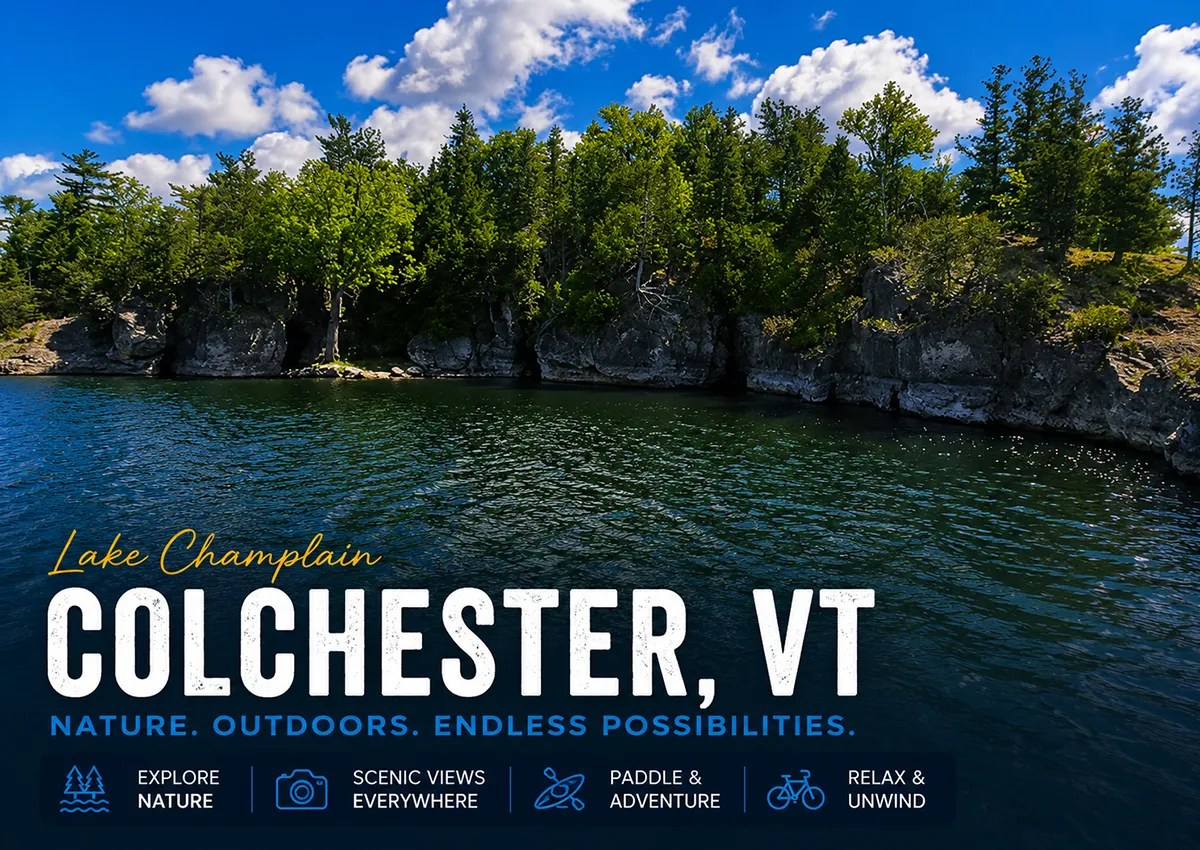
Photo: BASSIN’ USA
Colchester, VT — Lodging, Eats, Boating & More
Places to Stay
- Hampton Inn Colchester — Reliable base near I-89 with direct access to Malletts Bay launches.
- Residence Inn Burlington Colchester — Suite-style lodging ideal for multi-day fishing trips and gear storage.
- Quality Inn Colchester – Burlington — Budget-friendly option with quick highway access to multiple ramps.
- VRBO / Airbnb — Look for shoreline rentals in Malletts Bay or West Lakeshore Drive for shortest launch commute.
Places to Eat & Drink
- The Pickled Perch — Lakeside tavern in Malletts Bay with dependable post-fishing meals.
- Rozzi's Lakeshore Tavern — Casual local spot with parking for trucks and trailers nearby.
- Pioneer Lakeshore Café — Quick breakfast or lunch option when you need to stay on schedule.
- McDonald’s — Early-morning breakfast option before first light.
- Dunkin’ — Fast coffee stop for pre-launch fuel.
Marinas & Boating Access
- Champlain Marina — Full-service marina in protected Malletts Bay with fuel, transient slips, and service.
- The Moorings — Sheltered harbor marina offering dockage and seasonal services.
- Bay Harbor Marina — Lake access marina supporting slips and boating logistics.
Public Boat Launches
- Malletts Bay Fishing Access Area — Vermont Fish & Wildlife public access in Colchester with a concrete ramp, dock, restrooms, and ample trailer parking, providing direct access to Malletts Bay and Lake Champlain.
Official Launch Information: Malletts Bay – Vermont Fish & Wildlife
Tackle & Supplies
- Bibens Ace (Colchester) — Local hardware store carrying fishing tackle, live bait, and Vermont licenses.
- DICK'S Sporting Goods – Williston — Full fishing department approximately 20 minutes away for gear, line, and terminal tackle.
- West Marine – South Burlington — Boating parts, batteries, safety gear, and marine electronics support.
- Walmart – Williston — Backup stop for basic fishing gear and essentials.
Things to Do When You're Not Fishing
- Grand Isle State Park — Scenic shoreline park north of Colchester offering trails, picnic areas, and lake views.
- Malletts Bay Area — Walkable lakeside area with marina views, casual dining, and sunset access.
- ECHO, Leahy Center for Lake Champlain — Lake-focused science center in nearby Burlington, good for families on windy days.
- Church Street Marketplace — Downtown Burlington pedestrian district with shops, restaurants, and lakefront access.
- Burlington Waterfront Park — Lakefront walking paths and views of the Adirondacks across the water.
Note: Many businesses operate seasonally. Confirm hours and availability before travel.
What Makes Lake Champlain Different
Lake Champlain does not behave like a typical inland lake. Its length, basin segmentation, vegetation density, and cross-state geography create a fishery that requires planning, mobility, and environmental awareness.
Current
Unlike smaller natural lakes, Champlain has measurable current influence in certain sections. River inflows, narrows, and wind-driven movement create directional positioning for both bait and bass.
- River Influence: Inflows on the southern end create subtle but consistent positioning advantages.
- Narrows & Channels: Transitional water movement influences smallmouth positioning.
- Wind-Driven Current: Sustained wind can reposition bait and activate feeding windows.
Understanding how wind and inflow combine to reposition fish is a competitive advantage on this system.
Size of Water
At over 100 miles in length, Champlain fishes more like a chain of connected fisheries than a single lake. Runs between basins can be significant, and conditions may vary dramatically from north to south.
- Basin Separation: Southern grass fisheries differ entirely from northern rock structure.
- Travel Planning: Wind direction determines safe and efficient movement.
- Pressure Distribution: Fish and anglers spread out across expansive water.
This scale reduces localized burnout and allows multiple patterns to remain viable simultaneously.
Forage Base
Champlain supports a diverse forage system that fuels both largemouth and smallmouth growth.
- Baitfish: Alewife and other bait species support open-water feeding patterns.
- Crawfish: Abundant in rocky northern zones, critical for smallmouth diet.
- Panfish & Perch: Present throughout vegetation and transition areas.
- Vegetation-Based Forage: Southern grass systems sustain largemouth biomass.
This layered forage system supports healthy growth rates and sustained weight potential in both species.
Structure
Few northern lakes offer the structural diversity found on Champlain.
- Rock Humps & Shoals: Classic smallmouth structure in the northern basin.
- Sand-to-Rock Transitions: High-percentage staging areas during seasonal shifts.
- Extensive Grass Flats: Milfoil and vegetation systems dominate the southern end.
- Dock & Marina Systems: Productive largemouth habitat during warm-water periods.
From offshore structure to shallow vegetation, Champlain supports nearly every bass-fishing presentation style.
Plan Your Lake Champlain Trip
If you're planning a bass fishing trip to Lake Champlain, choosing where to stay and launch can have a major impact on how much productive water you can reach each day.
Before you travel, consider:
- Monitoring wind forecasts several days in advance. Lake Champlain is more than 100 miles long, and strong north or south winds can make open-water runs difficult or unsafe. Wind direction should factor into both your launch choice and daily fishing plan.
- Choosing your lodging based on the type of fishing you plan to do. Ticonderoga provides access to the grass-dominated southern basin, while Plattsburgh and Colchester position anglers closer to northern smallmouth water, offshore structure, Malletts Bay, and the Inland Sea. Staying near your primary fishing area can eliminate significant travel time.
- Building flexibility into your fishing plan. Champlain offers enough diversity that changing conditions don't necessarily mean losing a fishing day. When wind makes one area difficult, protected bays, grass systems, or another section of the lake may provide a completely different option.
- Understanding navigation, launch access, and current fishing regulations before arriving. Lake Champlain spans New York and Vermont, so anglers should know which state's waters they will be fishing and confirm current licensing, season, size, and possession requirements before launching.
Lake Champlain rewards anglers who plan around its size and diversity. Whether you're targeting largemouth in southern grass or smallmouth on northern rock and offshore structure, choosing the right location and remaining flexible can make a significant difference over the course of a trip.